X-ray security scanners serve as core inspection equipment at airports, railway stations and large-scale venues, with their radiation safety performance strictly regulated under U.S. federal regulations. 21 CFR 1020.40 is a special performance standard issued by the FDA for cabinet-type X-ray systems, establishing minimum compliance baselines for radiation leakage limits, engineering shielding and control devices of security inspection equipment.
In aviation security scenarios, TSA references this standard and requires operators to continuously verify equipment compliance through periodic radiation surveys. Understanding the testing logic of this regulation carries practical significance for equipment manufacturers, security operators and regulatory personnel.
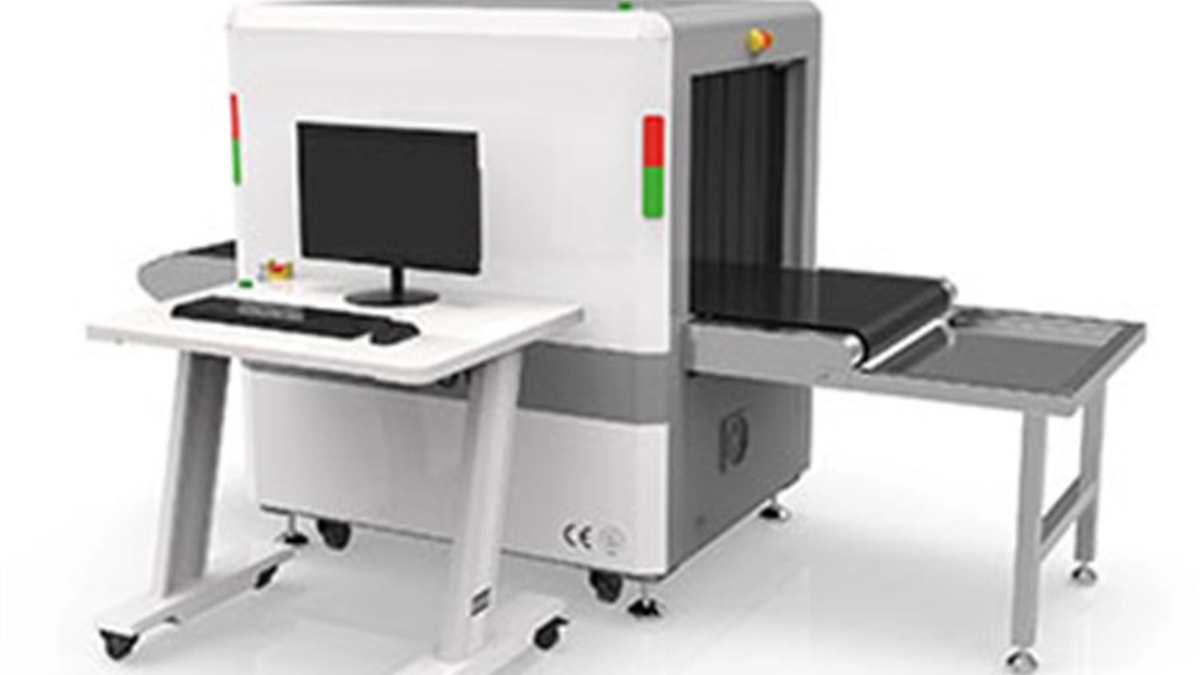
I. Radiation Leakage Limit under 21 CFR 1020.40 for X-ray Security Scanners: Technical Implications of the 0.5 mR/h Threshold
The core quantitative metric of 21 CFR 1020.40 is the radiation leakage limit. The regulation stipulates that the radiation exposure measured at any point 5 centimeters from the external surface of a cabinet X-ray system shall not exceed 0.5 milliroentgens per hour. It should be noted that this limit applies to "exposure level" rather than instantaneous rate. FDA testing guidance specifically clarifies this point, emphasizing that it measures cumulative exposure per unit time.
The measurement method for this limit is also standardized. Compliance judgment shall be calculated as the average value over an area of 10 square centimeters, with no side of this area exceeding 5 centimeters. Measurement conditions must cover the worst-case operating conditions of the system at maximum tube voltage, tube current, beam direction and scattering conditions, with doors and access panels closed and in any other positions permitting beam emission.
The statutory definition of "external surface" directly affects the selection of measurement points. Per the regulation, this term covers high-voltage generators, doors, access panels, latches, control knobs and other permanently installed hardware; the cross-sectional plane of any aperture or port also counts as part of the external surface. In practice, the lap joints of lead curtains at the inlet and outlet of the passage, door gaps and panel seams are high-priority locations for leakage measurement.
II. 21 CFR 1020.40 Testing for X-ray Security Scanners: Systematic Verification of Safety Interlocks and Engineering Protection
The redundant design requirement for safety interlocks embodies the regulation’s adherence to the single-fault safety principle. Each door shall be fitted with at least two safety interlock devices. Only one may physically disconnect the high-voltage generator power supply circuit upon door opening, and this disconnection shall not rely on any moving parts other than the door itself. Each access panel shall be equipped with at least one safety interlock, and failure of a single component shall not disable more than one required interlock device.
The reset logic after interlock-triggered beam cutoff is also regulated. Once an interlock interrupts X-ray generation, beam emission can only be restored via manual operation on the control unit; automatic reset is prohibited. In addition, the regulation explicitly states that ground faults shall not cause X-ray generation. This test shall be performed in conjunction with electrical safety testing.
Physical safety verification for ports and apertures constitutes another critical test item. The regulation prohibits any part of the human body from entering the primary beam through ports or penetrating into the cabinet via apertures. For security scanners, this means the passage dimensions must physically prevent penetration by human body parts, and integrity checks of lead shielding curtains form an essential part of routine maintenance.
III. 21 CFR 1020.40 for X-ray Security Scanners: Compliance Testing of Control and Indication Devices
Key control serves as the first barrier against unauthorized use. The regulation requires that X-ray generation shall be impossible once the key is removed. The controls to start and terminate X-ray emission must be independent of safety interlocks and main power controls.
The independence requirement for dual beam-on indicators merits special attention. The system shall be equipped with two independent indicators to signal whether X-rays are being generated. Failure of a single component shall not disable both indicators simultaneously. One indicator may be a milliammeter, provided it is labeled to indicate tube current; the remaining indicator(s) shall be marked “X-RAY ON”. At least one “X-RAY ON” indicator shall be visible from each door, access panel and port. This design ensures operators can instantly determine beam status from any position close to the cabinet.
Statutory requirements also apply to warning label posting. Notices shall be conspicuously posted at inspection points to advise that articles are undergoing X-ray inspection and remind passengers to remove X-ray films, scientific films and high-speed films. If exposure from a single scan exceeds 1 milliroentgen, the notice shall recommend removing all types of film. Labels shall also inform passengers of their right to request inspection of photographic equipment and films without X-ray scanning.
IV. 21 CFR 1020.40 for X-ray Security Scanners: Test Types, Cycles and Compliance Management
Classification of 21 CFR 1020.40 test types forms the institutional foundation of compliance management. Acceptance testing must be performed after new installation or relocation, and the equipment may only be put into service after passing. Annual routine testing requires a radiation survey within every 12 calendar months to prove continuous compliance with the standard. Special testing applies after structural or shielding modifications or when abnormal personal dosimetry readings are detected.
Record retention requirements are practically enforceable. At least one copy of the most recent radiation survey shall be kept at both the operator’s main office and the location where the X-ray system operates. Test reports must include instrument calibration status, test conditions, raw data and evaluation conclusions to support traceability reviews.
Consequences of non-compliance are clearly defined. Equipment failing testing must be shut down for repair and may resume operation only after passing retesting. Systems subject to FDA defect notices or modification orders may not be used unless FDA confirms the nonconformity poses no substantial risk of injury.
Essentially, 21 CFR 1020.40 testing is more than a routine regulatory compliance check; it validates the implementation of the radiation protection system at equipment level. From quantitative measurement of radiation leakage limits and redundant verification of safety interlocks to institutional execution of testing cycles, every link targets one shared goal: building a verifiable balance between inspection performance and radiation safety. For operators, understanding the protection logic behind regulatory clauses delivers longer-term value than merely "passing the test".
V. 21 CFR 1020.40 Testing for X-ray Security Scanners – Choose Shenzhen Zhongwei Inspection
Shenzhen Zhongwei Inspection is a leading domestic testing and certification laboratory for laser equipment. Holding CMA, CNAS and IAS laboratory accreditations, we boast extensive experience in 21 CFR 1020.40 testing for X-ray security scanners. Proficient in FDA regulations, we have long provided radiation product safety testing services for clients across China.
Contact us for inquiries regarding 21 CFR 1020.40 testing for X-ray security scanners.