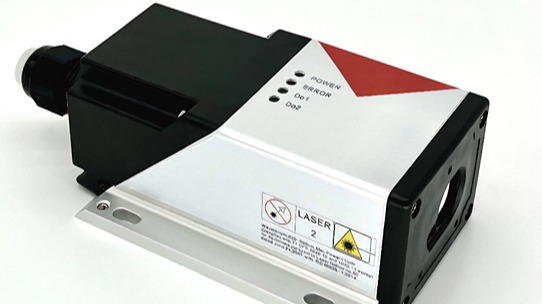
TOF (Time-of-Flight) laser displacement sensors are widely deployed in industrial automation production lines. Many manufacturers label their products as Class 1 or Class 2 for laser safety.
However, there is a commonly overlooked testing blind spot: the claimed safety class often teeters on the edge of the actual measured class.
TOF sensors emit pulse-modulated light whose peak power is far higher than the average power. Judging safety merely based on low average power will easily lead to misclassification. Laser safety classes are not selected arbitrarily; they are strictly determined through testing.
01 Benchmark for Classification: Which Category Does Your Sensor Fall Into?
The core applicable standard in China is GB/T 7247.1-2024, which is identically adopted from IEC 60825-1:2014.
Common Classification ScenariosMost industrial TOF displacement sensors feature short measuring ranges and well-controlled beam divergence, so they typically fall under Class 1 (no hazard) or Class 2 (visible light, protected by the human blink reflex).
The Easy-to-Miss Trap of Class 1M / 2MSome products are marked Class 1M or 2M. These devices are safe for naked-eye viewing, yet risks rise sharply once magnifying optics (such as telescopes or magnifying glasses for alignment) are used. Do not confuse them with standard Class 1 or Class 2 during classification.
Important Reminder: Laser classes under FDA and IEC frameworks cannot be directly interconverted. Test reports must clearly state the referenced standard version (e.g., IEC 60825-1:2014 or GB/T 7247.1-2024), otherwise compliance reviews may fail.
02 How to Perform Testing: Simulate the Worst-Case Exposure to Human Eyes
Laser safety classification testing cannot be done by simply reading an instrument at a random distance. The test setup and measurement distance must simulate the worst-case scenario where human eyes are most vulnerable to injury in real applications.
Aperture & Distance: Simulate Maximum Pupil SizeThe detector is fitted with a 7 mm aperture, corresponding roughly to the maximum dilated pupil of the human eye in total darkness.
Measurements are generally taken at 100 mm from the emission port. If the light-emitting aperture is recessed inside equipment, testing shall be performed at the closest accessible position where eyes or hands can approach.
Angular Alignment: Avoid Light Leakage UndermeasurementImagine shining a flashlight onto a wall: if the beam exceeds the lens boundary, light escapes. The same logic applies to sensor testing. If the sensor beam subtended angle is smaller than the instrument’s field of view, the measured reading will be artificially low and falsely indicate safety.
The instrument’s acceptance angle must fully enclose the entire laser beam to capture all radiant emissions and obtain true measurement results.
Variable Limit Values: Avoid Rigid Application of Fixed ThresholdsFixed Accessible Emission Limit (AEL) values cannot be directly applied during testing. For pulsed sensors, pulse duration, repetition frequency and wavelength all alter the safety threshold. A dedicated limit must be calculated according to the actual operating conditions of the device.
03 Exclusive Testing Pitfalls for TOF Sensors
Unlike continuous-wave lasers where only power measurement is required, TOF sensors carry three high-risk testing items:Pitfall 1: Peak Pulses Trigger Additional LimitsTOF relies on short pulses for ranging. High peak power can easily trigger supplementary limits for pulsed AEL. Testing must capture peak power, pulse width and duty cycle, rather than average power alone.
Pitfall 2: Temperature Drift Eats Into Safety MarginReal test case example: A sensor outputs 0.8 mW at 25°C ambient temperature and qualifies for Class 2. When ambient temperature rises to 45°C, output power climbs to 1.2 mW, approaching or exceeding the Class 2 limit.
Countermeasure: Laser safety testing shall not be performed only at room temperature. The full operating temperature range of the product must be covered.
Pitfall 3: Automatic Power Compensation Causes Unintended HazardsMany sensors adopt automatic gain compensation. When the lens gets contaminated by dust, the sensor will increase emitted power to maintain ranging accuracy. Testing must verify that output power remains bounded by AEL even when the compensation mechanism activates; unlimited power escalation must be prevented.
04 Classification Workflow & Common Misconceptions
Classification workflow: Start comparison from Class 1 and escalate grade by grade. If measured accessible emission exceeds the limit, move to the next higher class until the highest compliant class is identified.
Compliance Tips
Do not substitute rated power for measured accessible emission. Optical focusing and housing reflections may make actual radiant emission stronger than the bare light source.
Never treat pulsed light sources as continuous-wave sources during measurement.
Do not mix FDA and IEC classification systems, which may invalidate export certification work.
05 Our Service Offerings
As an accredited third-party laser testing laboratory, we deliver specialized laser safety class testing for TOF sensors and other laser products:
Standard coverage: GB/T 7247.1-2024, IEC 60825-1, FDA 21 CFR 1040.10
Specialized assessment: Pulse characteristic analysis, multi-wavelength superposition calculation, high-low temperature testing, automatic compensation mechanism verification
Full-service management: Pre-product evaluation, worst-case position scanning, formal reports with measurement uncertainty analysis
Extended services: CE certification, FDA registration and laser performance parameter testing for laser products