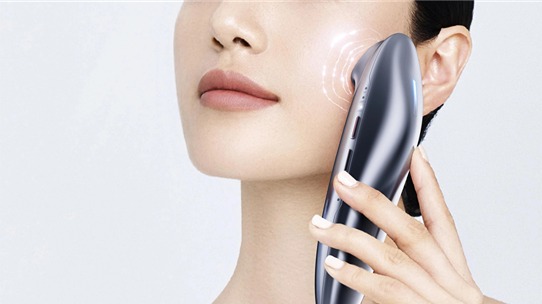
Radiofrequency (RF) beauty devices have become a mainstream product in the home beauty market, delivering non-invasive skin tightening and collagen regeneration. While RF energy delivers anti-ageing benefits, it also creates safety risks such as skin burns and thermal damage.
IEC 60335-2-115 is the dedicated safety standard issued by the International Electrotechnical Commission (IEC), officially titled Household and similar electrical appliances – Safety – Part 2-115: Particular requirements for skin beauty care appliancesIEC Websto.... It is the core technical threshold for RF beauty devices entering the EU and global markets. This standard has been identically adopted in China as GB/T 4706.118-2024, which will come into force on August 1, 2026.
1. Overview of IEC 60335-2-115
IEC 60335-2-115 is a special requirement under the IEC 60335 household appliance safety series, and must be applied together with the general safety standard IEC 60335-1IEC Websto....
The latest edition is the 2nd Edition (ED2), published in 2026, replacing the 2021 1st Edition. Major technical updates include:
Alignment with IEC 60335-1:2020
Clarified product scope (including skin care appliances with optical radiation emitters)
New requirements for washable appliances
Scope of Application
This standard covers household, commercial and similar skin beauty care appliances with a rated voltage ≤250 V (including DC mains and battery-powered units).
Covered products include:
High-frequency output devices (including equipment generating skin thermal effects)
Medium-frequency interferential current devices
Low-frequency stimulation devices
Ultrasonic skin care devices
Microneedling devices, plasma pens
Facial cleansing devices and wax melters
RF beauty devices fall squarely into the category of high-frequency output equipment with thermal effects on the skin.
2. Product Positioning & Exclusions for RF Beauty Devices
Contact-type RF beauty devices are the typical products covered by IEC 60335-2-115. The standard does NOT apply to:
Beauty devices with lasers or high-intensity light sources (governed by IEC 60335-2-113)
Medical-grade therapeutic equipment (covered by the IEC 60601 series)
RF devices with no direct skin contact
Ultrasonic devices equipped with focused ultrasound transducers
For hybrid multi-function devices combining RF + phototherapy, each functional module must be assessed separately for compliance.
3. Core Test Items for RF Beauty Devices
3.1 Electrical Safety Testing
Test items include input power & current, temperature rise, leakage current at operating temperature, electric strength, and transient overvoltage.
Key limit values:
Contact current: ≤0.5 mA for Class I appliances; ≤0.25 mA for Class II appliances
Earthing resistance of metal enclosures with protective earth: ≤0.1 Ω
Insulation resistance at ambient temperature: ≥2 MΩ
3.2 RF Output Performance & Thermal Safety
This is the most critical test item that differentiates RF devices from ordinary beauty equipment.
Evaluations cover RF output power, frequency stability and electrode temperature control precision.Non-negotiable safety limit: epidermal skin temperature shall not exceed 43 °C.Temperatures above this threshold pose a burn hazard. Testing simulates multiple usage scenarios to verify the reliability and response speed of the temperature control system. Industry group standards also cap the maximum epidermal temperature for home RF devices at 43 °C.
3.3 Structural Safety & Water Resistance
Since beauty devices are used on wet skin and may come into contact with liquids, strict waterproof and moisture-proof requirements apply.
Housings, buttons and treatment heads must pass impact testing: no cracking after a 0.5 kg weight falls from 30 cm height
No sharp edges or burrs
The appliance must not tip over when placed on a 10° inclined plane
3.4 Material Safety & Biocompatibility
All materials in direct contact with skin must pass cytotoxicity and sensitisation tests to avoid skin irritation or allergic reactions during long-term use.
3.5 Functional Safety Limits
Beyond temperature limits, other parameters are strictly controlled:
3.6 Annex BB: Measurement of RF Treatment Head Dimensions
Annex BB of IEC 60335-2-115 provides exclusive measurement guidelines for RF treatment heads, which only apply to RF products. It defines how to measure the effective contact area and determine the corresponding energy density.
4. Correspondence with GB/T 4706.118-2024
GB/T 4706.118-2024 is technically identical to IEC 60335-2-115.
Issued on: July 24, 2024
Effective date: August 1, 2026
Administered by: China National Light Industry Council
Technical committee: National Technical Committee on Household Appliances of Standardization Administration of China
Manufacturers selling products both domestically and overseas can reuse test data from IEC 60335-2-115 to meet the national standard, eliminating duplicate testing costs.
5. Test Process & Lead Time
Product Assessment: Confirm product type (standalone RF / RF + microcurrent / RF + light therapy hybrid), RF parameters and applicable standard clauses.
Technical Document Preparation: Compile product specifications, circuit schematics, BOM, user manuals and risk management files.
Sample Testing: Conduct full testing against IEC 60335-2-115 (plus IEC 60335-1 general requirements), including electrical safety, RF output performance, epidermal temperature control, structural safety and biocompatibility, plus Annex BB treatment head dimensional measurement.
Failure Rectification: Troubleshoot non-conformities, with priority on optimising temperature control systems to keep skin temperature below 43 °C.
Report Issuance: Issue formal CNAS/CMA accredited test reports once all tests pass.
Timeline & Cost
Standard lead time: 5–10 working days; longer for products requiring multiple usage simulations for thermal testing or design rectification.
Cost: Varies according to function complexity and test scope. Multi-function hybrid devices (RF + light + microcurrent) require assessment against multiple standards and incur higher testing fees.
6. Recommended Accredited Testing Laboratory
Shenzhen Zhongwei Inspection Technology Co., Ltd. (CTNT) is an authoritative third-party laboratory specialising in beauty device testing, holding both CMA certification and CNAS laboratory accreditation.
We have rich experience in IEC 60335-2-115 testing for RF beauty devices. Our laboratory is equipped with high-precision power analysers, temperature rise test systems and RF parameter measurement equipment to complete the full scope of testing:
Electrical safety
RF output performance
Epidermal temperature control verification
Mechanical structure inspection
Annex BB treatment head dimensional measurement
Our test scope covers IEC 60335-2-115 and GB/T 4706.118-2024. Reports are accepted for EU CE marking and domestic market regulatory compliance.
We also provide technical document drafting and product rectification consulting, delivering end-to-end compliance support to help you achieve fast market access.