In laser processing workshops, when a machine suddenly produces wider kerf or weaker welding strength, engineers often first suspect not a mechanical breakdown, but a change in the laser beam.
No matter how sophisticated the control chips a laser system is equipped with, its final processing performance hinges on two fundamental physical quantities: wavelength and power. These are also the most basic yet critical datasets included in the test reports we issue for various laser devices.
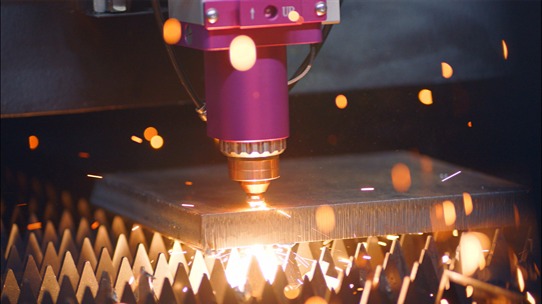
01 Wavelength: Governs How Lasers Interact with Materials
Physically, wavelength determines photon energy, which underpins the fundamental mechanism of laser-material interaction.
Lasers of different wavelengths serve distinctly different applications:
1064 nm (Infrared): Ideal for metallic materials, widely adopted for cutting and welding.
532 nm (Green): Excellent for medical aesthetics and ultra-precision machining.
808 nm (Near-infrared): Commonly used as pump sources for fiber lasers.
Why is accurate wavelength measurement mandatory? Wavelength drift is a hidden hazard in practical use.
For medical procedures: if the laser is calibrated for a specific tissue absorption peak, a drift of just a few nanometers will stop it from targeting the intended tissue, leading to penetration and accidental injury to healthy surrounding tissue. In optical communication, minor wavelength deviation triggers signal crosstalk and a sharp rise in bit error rate.
02 Power: Output Magnitude Matters, Yet Stability Matters More
Power indicates the magnitude of laser output energy. Industrial and research applications demand not only sufficient power, but consistent power output.
Insufficient power results in cutting slag and failure to pierce thick plates.
Power fluctuation causes incomplete welds, porosity, or inconsistent marking shading in fine engraving.
Before leaving the factory, lasers must undergo thorough characterization tests, including Power-Current-Voltage (PIV) curve testing and long-term power stability testing. Only by capturing its performance across different operating conditions can we guarantee reliable operation after delivery.
03 How Are the Tests Conducted? Inside Look at Laser Inspection
As a testing laboratory, we handle signals ranging from extremely weak continuous beams to ultra-short pulsed lasers, requiring tailored test equipment and methodologies.
Power Measurement: Probe Selection Is Critical
Continuous-wave lasers can be read directly with an optical power meter. For pulsed lasers, single-pulse energy is measured, and peak power is calculated combined with pulse width.
Thermopile power meters are the mainstream choice for industrial use. They measure laser energy via thermal absorption, featuring a flat spectral response and strong tolerance to variations in beam angle and spot distribution. For ultra-low power or special wavelength bands, integrating spheres paired with photodiodes (PD) are deployed for higher precision.
Wavelength Measurement: Accuracy and Continuous Monitoring
Wavelength testing commonly uses high-resolution optical spectrum analyzers with accuracy up to ±0.05 nm. For ultra-high precision requirements, wavemeters can reach an accuracy of ±0.0001 nm.
Accurate one-off measurement is challenging, yet continuous monitoring is harder. Changes in driving current and heat buildup during operation both induce wavelength drift. Therefore, testing records not only the initial value, but also long-term stability under temperature cycling and current variation.
Besides these two indicators, beam quality (M² factor), polarization state and other parameters are also common supplementary factory tests.
04 Why These Tests Are Indispensable Before Shipment
Test data is objective, and end users cannot afford uncontrolled laser performance.
On industrial production lines: A few-percent power fluctuation leads to incomplete penetration and rough cut surfaces on thick plates.
In medical devices: Wavelength accuracy directly decides treatment efficacy and safety.
In scientific research: Unstable laser power invalidates the repeatability of all experimental results.
For manufacturers, test reports reassure customers and support product iteration and design optimization. Comprehensive parameter testing points the direction for technical improvement.
05 Our Testing Services
As an accredited third-party testing laboratory, we provide professional laser core parameter testing services:
High-precision testing: Wavelength (up to ±0.0001 nm accuracy), output power, power stability and other key parameters.
Wide product coverage: From high-power industrial fiber lasers to low-to-medium power lasers for medical, communication and research use, tested in accordance with national and international standards.
Accreditation-backed reports: CNAS and CMA accredited laboratory, authoritative test data with globally recognized reports.
One-stop service: Full support including pre-test parameter evaluation, sample testing and issuance of Chinese & English test reports.