With high efficiency, environmental friendliness, precision and non-contact operation, laser cleaning technology is gradually replacing traditional chemical cleaning and mechanical grinding. It is widely used in automotive manufacturing, aerospace, mold maintenance, cultural relic restoration and other industries.
As one of the world’s largest industrial equipment markets, the United States sees steadily rising demand for laser cleaning machines. However, laser cleaning equipment falls under FDA’s mandatory regulation for radiation-emitting electronic products. Products exported without completing regulatory registration will face customs detention, market bans and heavy fines.
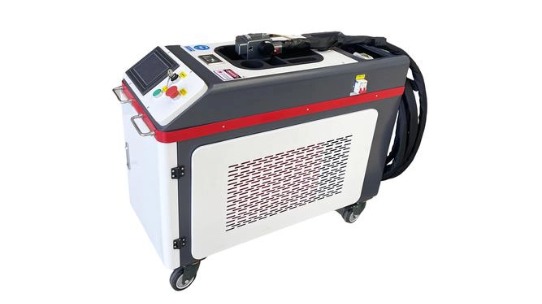
01 Regulatory Basis & Product Classification
Laser cleaning machines exported to the US are regulated by the Center for Devices and Radiological Health (CDRH) under the FDA. The core regulatory provisions are 21 CFR 1040.10 and 21 CFR 1040.11 (Laser Product Performance Standards)GovInfo.
Key Classification Rules
Most industrial laser cleaning machines are regulated as radiation-emitting electronic products and only need product registration under this category.
Medical device filing is not required — this route only applies to therapeutic medical laser equipment.
Industrial laser cleaning machines usually have output power of several hundred watts and above, and are mostly classified as Class IIIb or Class IV, subject to the strictest regulatory controls.
02 Required Documentation List
Before applying for FDA certification, enterprises must prepare the full set of documents below:
Product & Technical Documents
Product identification: Full name, model number, classification code
Intended use statement: Industrial cleaning and applicable scenarios (factories, shipyards, etc.)
BOM: Model numbers and raw material information for all components
Electrical performance data: Circuit schematics and electrical parameter sheets
Mechanical drawings: Structure diagrams, exploded views or assembly drawings
Photos of laser head and optical system (if the unit cannot be disassembled)
Product photos, English user manual and safety warning labels
Laser hazard classification documentation
Enterprise & Registration Information
Manufacturer details: Company name, physical address and contact information
U.S. Authorized Agent (mandatory for overseas manufacturers, acting as the sole liaison with the FDA)
DUNS (Data Universal Numbering System) number
03 Six-Step Certification Process
Step 1: Confirm Laser Hazard Class
Complete professional testing to determine whether the product is Class IIIb or Class IV, and clarify corresponding compliance requirements.
Step 2: Complete Laser Safety Testing
Testing shall be performed by an accredited laboratory in accordance with 21 CFR 1040.10 to issue an FDA-recognised laser radiation safety test reportGovInfo.
Test items include: wavelength, maximum output power, pulse energy, radiation leakage control and safety interlock verification.
Step 3: Compile Registration Documents
Gather manufacturer information (including DUNS number and U.S. agent details), technical files and laser safety test reports.
Step 4: Submit FDA Registration Application
File the product report (Form FDA 2877) electronically via the FDA Electronic Submission Gateway to complete manufacturer registration and product listingd1kxqhlpuu....
Step 5: Obtain the Registration Number
Once the application is approved, the FDA issues a unique Accession Number in its official system, which serves as the core document for legal entry into the U.S. market.
Important note: The FDA does not issue paper certificates; only an electronic registration number is provided.
Step 6: Annual Registration Maintenance
FDA laser product registration is valid for 1 year. Renewal and annual reporting (including production and sales volume) must be completed between July 1 and September 1 each year. Failure to renew on time will result in automatic invalidation of the Accession Number.
04 Timeline & Cost Reference
Project Timeline
The full FDA registration procedure (including laboratory testing and official filing) takes 2–3 weeks:
Lab testing: 1–2 weeks
FDA review: 1–2 weeks
Critical reminder: The FDA adopts a “register first, random inspection later” policy. Even after obtaining an Accession Number, the registration may be revoked if non-compliance is found during post-market spot checks. Continuous product compliance must be maintained at all times.
Cost Breakdown
The FDA charges no official registration fees for non-medical industrial laser products. Costs mainly cover third-party testing and U.S. Authorized Agent service fees. Quotations are made based on the product’s laser parameters.
05 Our Services
As an accredited third-party laser testing laboratory, we provide end-to-end support for laser cleaning machine FDA compliance:
Full-scope testing: Complete laser radiation safety, interlock performance and label compliance testing per 21 CFR 1040.10GovInfo
Accreditation: CNAS, CMA and IAS laboratory recognition
One-stop full-process service: Laser class assessment, sample testing, report issuance, FDA registration, U.S. agent coordination and annual report maintenance
Rich industry experience: Long-term focus on laser product testing and export regulatory compliance