When accepting test or CE certification applications for laser safety barriers (such as safety curtains, viewing windows, acrylic protective panels, etc.), we frequently encounter this scenario: customers submit certificates to EN 12254 for use with kilowatt-class high-power laser equipment. However, based on the defined scope of the standards, such certificates are not valid for this power range. Matching safety barriers to equipment solely on this basis creates substantial safety risks.
What is the difference between IEC 60825-4 and EN 12254, two standards often listed together on certificates? What products and power ranges do they each apply to?
01 Scope of Products and Applications: Both Block Lasers, But With Clear Boundaries
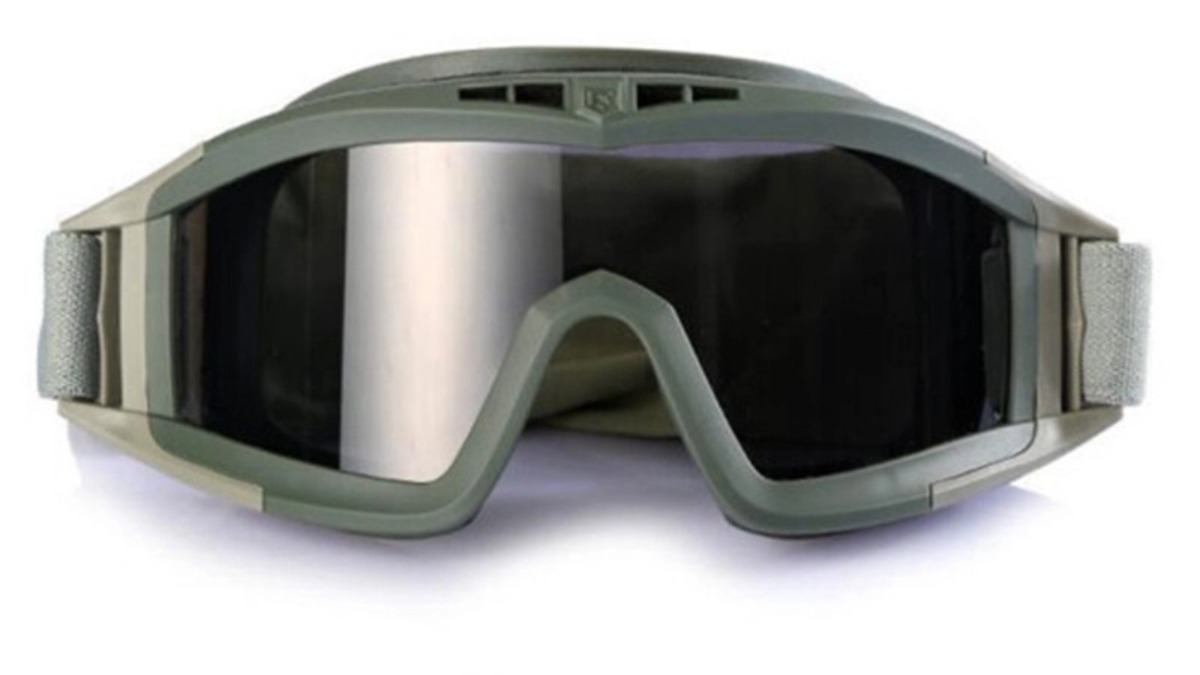
Both standards govern laser protective equipment, including common items such as:
That said, there are fundamental differences in their coverage.
EN 12254: Applies only to passive safety barriers. It carries strict usage restrictions: it is intended solely for supervised workplaces, with a maximum permitted laser average power of 100 W or single pulse energy of 30 J.
IEC 60825-4: Covers laser guard systems. This includes safety panels, curtains, viewing windows and enclosure walls, plus requirements for personnel access, safety interlocks and marking. It has no upper power limit; its core focus is the integrity of the protective assembly as a machine safety component.
02 Standard Status: Not Two Versions of the Same Document
Many customers mistakenly assume the two standards replace one another, which is incorrect.
IEC 60825-4: Published by the International Electrotechnical Commission (IEC), current edition 2022. It is the international framework standard for laser guards, adopted in the EU as EN IEC 60825-4, a harmonised standard under the Machinery Directive.
EN 12254: A European product-level test standard, titled Safety of laser barriers for laser workplaces – Requirements and testing.
To summarise: IEC 60825-4 defines the complete safety logic for a protective system, while EN 12254 provides specific product test specifications. The two standards coexist and neither supersedes the other.
03 Core Differences: Power Limits and Evaluation Philosophy
Power Ceiling
EN 12254 explicitly sets the 100 W / 30 J threshold. Beyond this boundary, the protection class stated on the certificate is invalid. IEC 60825-4 has no defined power cap and is suitable for kilowatt-class and higher-power laser systems.
Test Philosophy
Testing under EN 12254 is carried out under defined fixed conditions, and the stated protection rating is tightly linked to the irradiance applied during testing.
Evaluation under IEC 60825-4 places greater emphasis on how beam diameter affects irradiance. For example, the same laser protective material may be certified under EN 12254 for 2.5 MW/m² irradiance, whereas assessment to EN IEC 60825-4 may validate medium-grade variants up to 4.25 MW/m² and high-grade variants up to 500 MW/m².
This does not mean EN 12254 testing is less rigorous. Its framework was simply not designed for high-irradiance operating scenarios.
04 Guidance for Testing and Compliance Review
For manufacturers and system integrators, follow this two-step check before submission or integration:
Check the standard reference: If your laser operates well above 100 W (e.g. kilowatt laser cutters, handheld laser welders), a test report only to EN 12254 is insufficient. Before system integration, require documentation evaluated to IEC 60825-4 from your supplier.
Verify test conditions: Confirm whether the irradiance conditions used in testing match your real-world operating conditions. A safety barrier must not only withstand laser exposure; it must also be fit for purpose within the complete machine safety system.
As a testing laboratory, we help clients confirm the correct standard at the early submission stage, avoiding the costly situation where a completed test cannot be used for the intended application.
05 Our Services
As an accredited third-party laser testing laboratory, we offer the following services for laser protective assemblies:
Standard coverage: IEC 60825-4, EN 12254 and GB/T 7247 series
Full assessment: Optical Density (OD), radiation resistance, mechanical strength and marking inspection
Application consulting: Help manufacturers select the correct test standard and prevent non-conforming certification
End-to-end service: Document pre-review, sample testing and final report issuance
Custom support: If you are unsure which standard applies to your safety barrier or have questions about safety limits for high-power use cases, send us your datasheet and our engineers will carry out a standard applicability assessment.