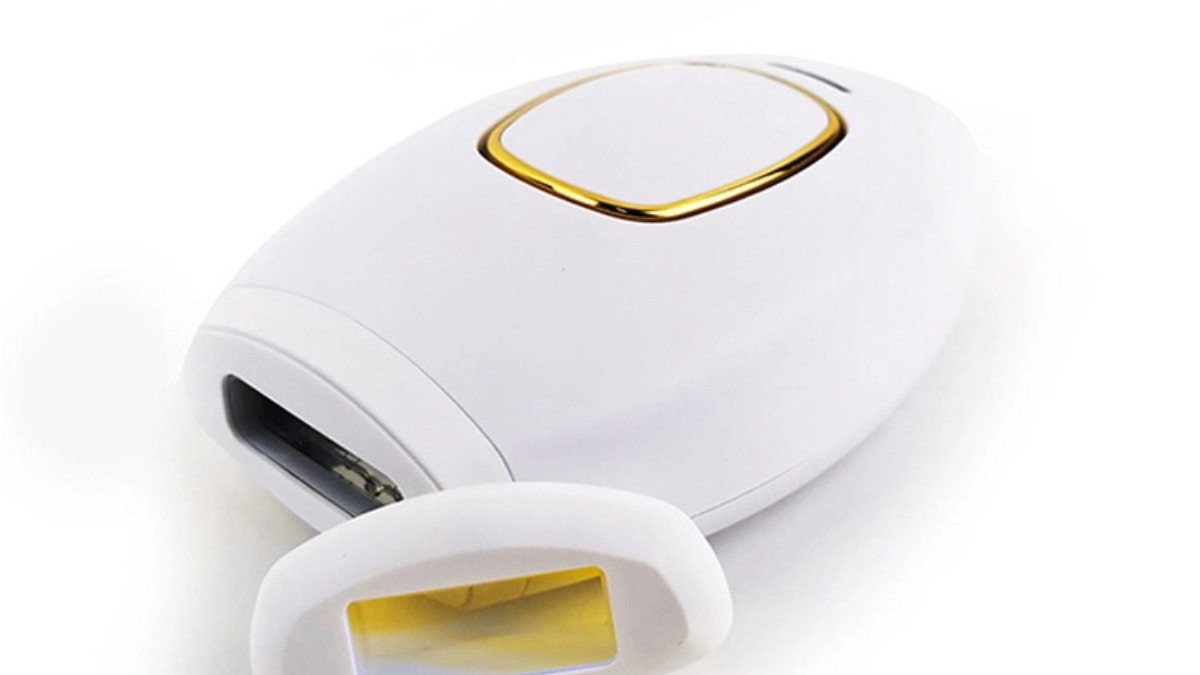
Home laser hair removal devices inhibit hair growth by heating hair follicles with laser or intense pulsed light at specific wavelengths. These products carry two core risks that distinguish them from ordinary household appliances: first, optical radiation hazards — residual radiation may cause eye damage even after filtering; second, skin contact safety. Since the device operates via physical contact with skin, out-of-control temperature rise can lead to burns.
IEC 60335-2-113 is formulated to systematically control these special risks. The 2nd edition released in 2025 has officially replaced the old version. Understanding its testing logic matters not only for product compliance but also directly safeguards end-user safety.
01 Scope of Application
This standard applies to household and similar beauty care appliances with a rated voltage not exceeding 250 V (including DC-powered and battery-operated units), where the luminous surface area is less than 25 cm².
Products with a luminous surface area equal to or greater than 25 cm² fall under IEC 60335-2-27.
Excluded Products:
02 Key Updates in the 2nd Edition (2025)
Compared with the previous edition, the 2025 2nd edition features several notable revisions:
Aligned with IEC 60335-1:2020
Added temperature limits for accessible surfaces (Clause 11)
Updated optical radiation assessment to reference IEC 62471-7
Introduced new requirements for power supply
These revisions reflect continuous attention from standard developers to real-world risks in household usage scenarios.
03 Core Testing Items
3.1 Electrical Safety Testing
Although hair removal devices generally have low power ratings, they work in direct contact with skin and may be used in humid environments, so electrical safety requirements remain stringent.
Core test items:
For rechargeable products, safety requirements also apply under battery-powered operation.
3.2 Optical Radiation Safety — The Most Critical Technical Barrier
This is the key testing dimension differentiating home laser hair removal devices from other small household appliances.
Testing reference: IEC 62471-7Test content:
Measure output wavelength, pulse energy, repetition rate and emission duration using spectrometers and laser power meters
Calculate Accessible Emission Limit (AEL)
Laser-classified products shall also refer to IEC 60825-1 for laser class classification
Class requirement: Home hair removal devices normally need to meet Class 1 or Class 1C criteria.
Structural requirements:
The equipment must be fitted with safety interlock devices
Pulses can only be emitted when the treatment head is properly in contact with the skin
Laser radiation must be interrupted within 0.1 seconds once skin contact is lost
3.3 Temperature Rise & Contact Surface Temperature — Key Enhancements in the 2025 Edition
The newly added accessible surface temperature limits (Clause 11) in the 2025 edition directly address practical pain points of laser hair removal devices during use.
The treatment window, outer casing and handle grip area may heat up during operation. Tests measure temperatures of all accessible surfaces under normal and abnormal operating conditions to ensure readings stay within standard limits.
This poses substantial challenges for products with high energy density output, which often require optimized heat dissipation structures or power management strategies.
3.4 Mechanical Safety & Structural Inspection
Key checks include:
For devices with replaceable treatment heads or adjustable power levels, safety consistency under different configurations shall also be verified.
3.5 Marking & Instruction Manual Review
Standard requirements:
Laser warning labels and class markings shall be clearly printed on the product nameplate
The user manual must contain complete safety warnings
The 2025 edition adds special warnings regarding use by children and instructions for salon-only appliances
04 Testing Process
Step 1: Preparatory Work & Document Review
Enterprises shall submit a complete technical dossier: product specification, circuit diagram & PCB layout, BOM, user manual and product photos. The testing laboratory conducts a preliminary assessment to confirm whether the product falls within the scope of this standard and identify potential testing challenges.
Step 2: Sample Testing
After samples arrive at the laboratory, tests are performed sequentially per standard clauses:
Electrical safety tests are usually completed first
Optical radiation tests are carried out in a dedicated darkroom with spectroscopic equipment
Temperature rise tests run until thermal stability under specified ambient temperature and load conditions
If non-conformities are identified during testing, the enterprise shall implement rectification and resubmit samples for retest — this is the main factor extending the lead time.
Step 3: Report Issuance
Once all tests pass, the third-party laboratory issues test reports in both Chinese and English. These reports can be used as:
Technical supporting documents for CB certification
Technical supporting documents for CE certification (LVD Directive)
Supporting evidence of radiation safety to assist FDA registration in the US market
05 Lead Time & Cost Reference
Standard testing lead time: generally 7 to 15 working days.
Factors affecting lead time:
Product complexity (e.g. smart control, multi-level power adjustment)
Whether rectification and retests are required
Laboratory scheduling
Cost note: Testing fees mainly depend on product functional complexity, number of test items and rectification requirements. A detailed quotation is available upon evaluation based on product parameters.
06 Our Services
As an accredited third-party testing laboratory, we provide professional IEC 60335-2-113 testing services for home laser hair removal devices:
Qualification Guarantee: CNAS/CMA accredited laboratory with internationally recognized reportsFull-scope testing: Electrical safety, optical radiation safety, temperature rise & contact temperature, mechanical safety, marking and user manual reviewPreliminary pre-test service: Pre-delivery screening to detect and fix risks in advanceRectification support: Provide actionable improvement suggestions for non-conformitiesEnd-to-end service: One-stop solution covering document pre-review, sample testing and report issuanceExtended services: Concurrent IEC 62471 photobiological safety, IEC 60825-1 laser safety class testing and CE certification support