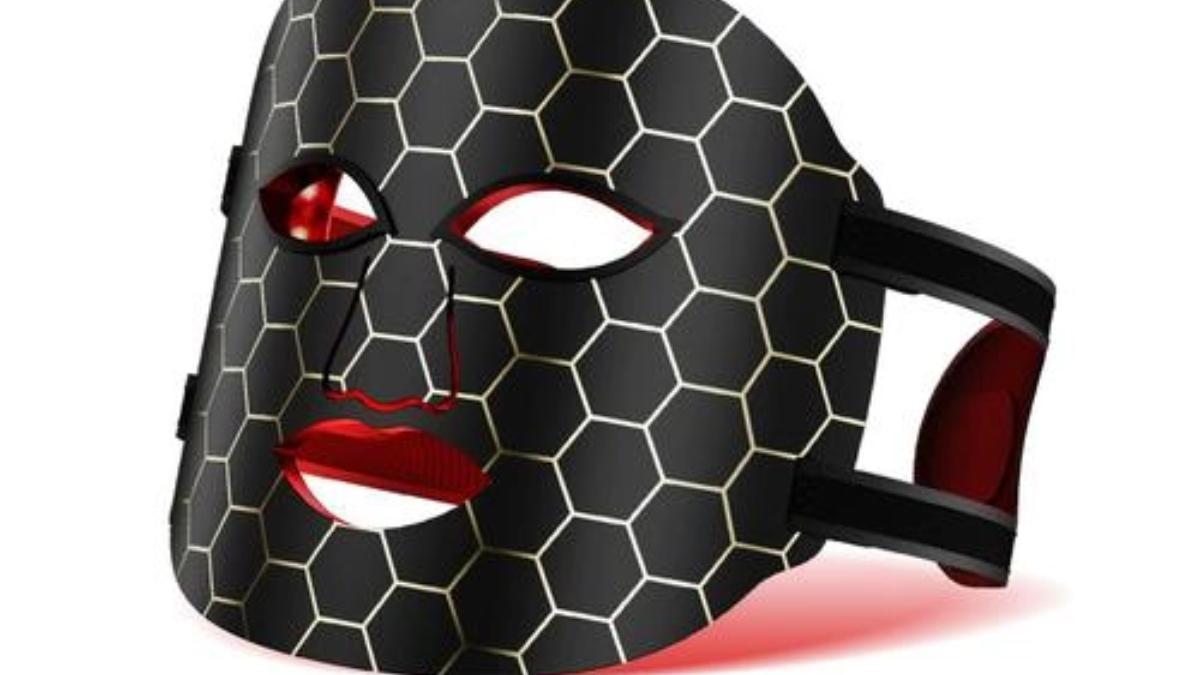
The phototherapy effect of a photon facial mask depends on whether light energy can act on facial skin with sufficient intensity and uniformity. Irradiance represents the intensity of light energy, while irradiance non-uniformity determines the consistency of skincare results across the entire face. For a mask labelled “630 nm red light”, if its irradiance fails to meet specifications or its light distribution is uneven, the actual performance may fall far short of marketing claims. Irradiance testing serves as a critical step to convert vague “phototherapy efficacy” claims into quantifiable data.
1. Testing Standards and Scope of Application
Photon facial masks are household optical radiation beauty devices. For efficacy evaluation, irradiance parameters provide an objective basis to judge product performance. On the safety front, photobiological safety testing shall refer to IEC 62471 to assess photochemical UV hazards to skin and eyes, retinal blue-light hazards and other indicators.
2. Pre-test Preparation: Environment, Instrumentation and Sample Condition
Test repeatability starts with standardized preparation. Many irradiance deviations stem not from product defects, but ambient light interference or samples that have not reached thermal stability.
Environment: Tests are conducted in a darkroom with background illuminance maintained below 0.1 lx. The laboratory temperature is recommended at 23±2°C. LED light output is sensitive to junction temperature, and temperature fluctuations will introduce measurement errors.
Equipment: A spectroradiometer is the core measuring instrument. For mixed LED light sources, the instrument shall be capable of automatically identifying wavelengths of mixed light and segmented irradiance.
Sample: Power on the sample under rated voltage and preheat for at least 15 minutes before measurement until light output stabilizes. If the product has multiple operating modes, select the maximum power setting as the worst-case test condition.
3. Practical Test Procedures: What and How to Measure
Measurement Distance: Contact Measurement
Photon masks are worn directly against the face, so the detector is placed in direct contact with the light-emitting surface, with a measurement distance set to 0 cm.
This distance must be stated clearly in the test report; otherwise, data comparison is not feasible.
Measurement Points: Central Area & All Wavelength Bands
Position the probe at the centre of the mask’s luminous area and record light intensity and spectral distribution.
Masks generally incorporate red, blue, yellow and other LED chips. The intensity of each wavelength band shall be recorded separately.
Uniformity Check: Irradiance Non-uniformity
This metric determines whether light covers the whole face evenly.
Multiple points on the mask are measured, and the variance between readings is calculated.
Reference data: 2025 comparative test by Guangdong Consumer Council
All 12 tested samples achieved variance below 10%, among which 4 samples were under 5%.
This indicator matters greatly. A mask with a bright centre but dim edges delivers inconsistent light exposure across facial regions, leading to uneven skincare results.
Wavelength Verification: Peak Wavelength Validation
While measuring intensity, verify whether the emitted light matches the claimed wavelength.
For example, for a product claiming “630 nm red light”, excessive deviation of the measured peak wavelength invalidates its stated red-light efficacy. Photomask performance is highly wavelength-dependent; incorrect wavelengths mean the claimed phototherapy benefits cannot be achieved.
4. Testing Lead Time: From Laboratory Test to Final Report
With ready samples and calibrated instruments, a complete irradiance test (including irradiance measurement, non-uniformity assessment and wavelength verification) normally takes 1 to 2 working days. Sample preheating and stabilization take approximately 0.5 hours. Multi-point measurement duration varies according to LED density and the number of measuring points, while data processing and report generation take 2–4 hours.
If IEC 62471 photobiological safety classification assessment is required alongside, the lead time will increase substantially. It involves measuring UV, blue light, infrared and other hazard-weighted quantities under different distances and angles, which typically takes 5–7 working days.
Actual turnaround may vary depending on sample quantity, number of test modes and laboratory scheduling. It is recommended to reserve a minimum two-week testing window during product development and validation.
5. Value of Testing: Beyond Compliance
Irradiance testing is not merely a simple pass/fail checkpoint. For product developers, irradiance distribution data guides LED layout optimization and optical design iteration. For end consumers, products with irradiance non-uniformity below 5% deliver consistent full-face light coverage in every use.
Amid rapid market expansion and proliferating performance claims for light therapy masks, quantifiable irradiance testing brings phototherapy from marketing rhetoric back to engineering reality.