1. Overview of Laser Imaging Equipment
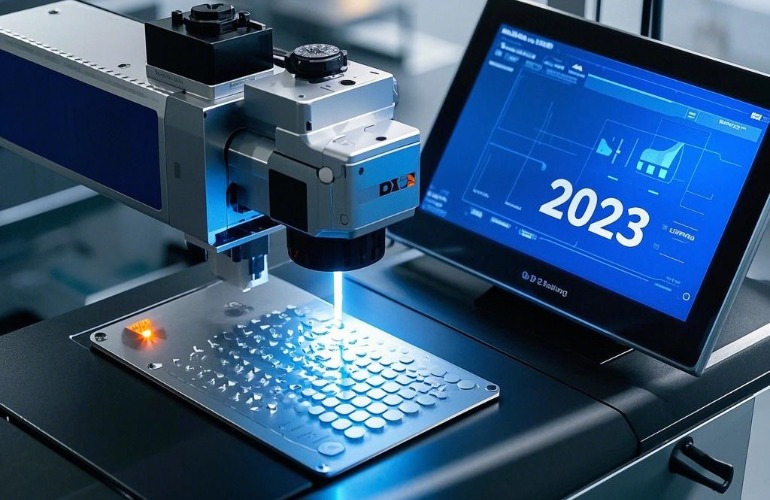
Laser imaging equipment adopts lasers as light sources to acquire target image information via scanning or array detection technologies. Based on technical principles, it is divided into two categories: scanning imaging and non-scanning imaging.
Scanning imaging systems utilize single-element detectors to capture images point by point, featuring mature technology and high resolution. Non-scanning imaging systems employ area array detectors to obtain full-frame images in a single acquisition with fast imaging speed.
Common laser imaging equipment by application scenarios are listed below:
Security surveillance laser cameras: Adopt active laser illumination to realize long-distance night vision imaging. High-end models support night vision over 3 km and are widely deployed for border security, smart city and other scenarios.
Industrial machine vision systems: Deeply integrated into intelligent manufacturing for online precision inspection, defect identification and dimensional measurement.
LiDAR imaging systems: Including airborne mapping systems, automotive 3D imaging radars. They simultaneously capture intensity images and range images to generate high-resolution 3D point cloud data.
Medical laser imaging devices: Such as laser diagnostic instruments and medical laser scanning imaging systems.
With technological advancement, market boundaries between consumer and industrial laser imaging equipment keep expanding, generating growing urgent demands for product safety compliance.
2. Introduction to IEC 60825-1 Testing
IEC 60825-1 is the core international standard for laser product safety, officially titled Safety of laser products — Part 1: Equipment classification and requirements.
Based on scientific assessment of potential hazards induced by laser radiation to human eyes and skin, the standard establishes risk classification for laser products and serves as the globally recognized benchmark for laser safety evaluation.
The standard defines seven laser safety classes ordered by increasing hazard level: Class 1, Class 1M, Class 2, Class 2M, Class 3R, Class 3B and Class 4. Class 1 products are deemed safe under normal operating conditions, while Class 3B and Class 4 equipment require rigorous safety protection measures.
For laser imaging equipment, the core testing tasks are as follows. Under standard test conditions, calibrated precision instruments including laser power meters, energy meters and beam analyzers are used to measure the Accessible Emission Level (AEL). Key parameters under measurement include wavelength, continuous-wave power, single pulse energy and beam divergence angle, to determine the correct safety class. Testing also covers verification of engineering protective measures such as interlock functionality, emergency stop effectiveness, and compliance inspection of product markings.
This standard has been adopted by the EU as EN 60825-1, and identically adopted in China as GB/T 7247.1-2024. It constitutes the fundamental technical basis for laser products accessing major global markets.
3. Full Procedure for Obtaining an IEC 60825-1 Test Report
Standard IEC 60825-1 testing consists of five phases:
Consultation and preliminary assessment
Manufacturers submit basic information including product specifications and technical parameters to the testing laboratory. The laboratory evaluates applicable standards and required test items.
Contract signing and sample submission
Both parties confirm test items, fees and lead time before contract execution. Manufacturers deliver test samples (normally 1–2 complete finished units plus key components) as required.
Laboratory testing
Engineers conduct comprehensive sample testing in accordance with the standard, covering optical radiation measurement and safety function verification.
Report drafting and internal review
After testing completion, the technical team compiles the test report, followed by internal auditing to guarantee data accuracy.
Report issuance
Upon successful review, the official bilingual test report is delivered to the client.
Documents to be prepared before application include product technical files (circuit diagrams, structural drawings, laser component specifications), user manuals containing safety warnings, product marking drafts and enterprise qualification documents.
4. Lead Time and Cost Reference for IEC 60825-1 Testing
Testing Lead Time
Under normal circumstances, the standard testing cycle for laser imaging equipment is 7 to 15 working days. If products involve complex configurations such as multi-wavelength modules or adjustable output power, or retesting is required after rectification, the timeline may extend to 15–20 working days. Expedited services are available at selected laboratories with a minimum turnaround of 3 working days at extra cost.
Testing Cost
Total fees depend on product complexity, laser power class and the quantity of test items. Charges for low-power consumer-grade equipment are relatively low; medium and high-power industrial devices incur higher costs due to stricter test requirements and more evaluation items. Fees generally include standard testing charges and report compilation fees. Rectification guidance and expedited services are charged separately.
5. Guidance on Selecting a Qualified IEC 60825-1 Testing Laboratory
Selecting a third-party laboratory with CNAS/ILAC accreditation is a prerequisite for internationally accepted test reports.
Shenzhen Zhongwei Inspection Technology is a professional laser product testing and certification institution based in South China. With more than ten years of industry experience, we have served over 6,000 laser industry clients. Our ISO 17025 accredited laboratory is equipped with full sets of imported high-precision instruments including laser power meters, spectrometers and beam quality analyzers, covering all test items specified in IEC 60825-1.
Our service portfolio includes:
IEC 60825-1 international testing
EN 60825-1 testing for EU market access
GB/T 7247.1 testing for China domestic market
US FDA laser product registration
CE certification for laser equipment
For manufacturers of laser imaging equipment, IEC 60825-1 testing is not merely a compliance threshold for global market entry. It is also a key measure to fulfill primary product safety responsibilities, mitigate legal risks and enhance brand reputation. We recommend carrying out pre-testing at the product design stage to identify potential safety risks early and avoid substantial rework costs in later phases.