

Solutions
Industry Solutions

Industry Solutions

More
Solutions
Services

Leveraging our core and differentiated strengths, we provide you with high-quality, comprehensive technology services

More
Solutions
News Center

we provide you with high-quality, comprehensive technology services

More
Solutions
Why Choose Us

We provide professional optical product testing services (laser product safety testing and performance parameter testing, photobiological safety testing for non‑laser products), as well as energy efficiency testing services (EU ErP energy efficiency testing, US DOE energy efficiency testing, California CEC energy efficiency testing), among others.

More
Solutions
Contact Us

If you have requirements for laser products (laser product safety testing and laser performance parameter testing) and energy efficiency testing (EU ErP energy efficiency testing, US DOE energy efficiency, California CEC energy efficiency, UK energy efficiency testing), please feel free to email us at: admin@ctnt-cert.com


More
Industry News

Shenzhen Zhongwei Testing Technology Co.,Ltd.

Industry News

Authoritative Interpretation of EN ISO 11553-1:2020 Standard

2026-07-07 Industry News

EN ISO 11553-1:2020 Safety of machinery – Laser processing machines – Part 1: Laser safety requirements is a mandatory safety standard for CE certification of laser processing equipment entering the EU market, as well as a core universal global criterion for industrial laser safety. Its core objective is to fully prevent laser radiation injuries to personnel through full-lifecycle risk control.


未命名(1).png


1. Core Standard Positioning and Scope of Application

1.1 Standard Classification

This standard holds dual recognition as a European harmonized EN standard and an international ISO standard, identical to ISO 11553-1:2020. It serves as a core supporting document for the EU Machinery Directive 2006/42/EC.Classified as a Type B general safety standard, it has lower priority than Type C product-specific safety standards.It supplements and elaborates on the general laser safety requirements specified in IEC 60825, focusing on scenario-based safety control for laser processing machinery.

1.2 Applicable Equipment (Covers all industrial laser processing scenarios)

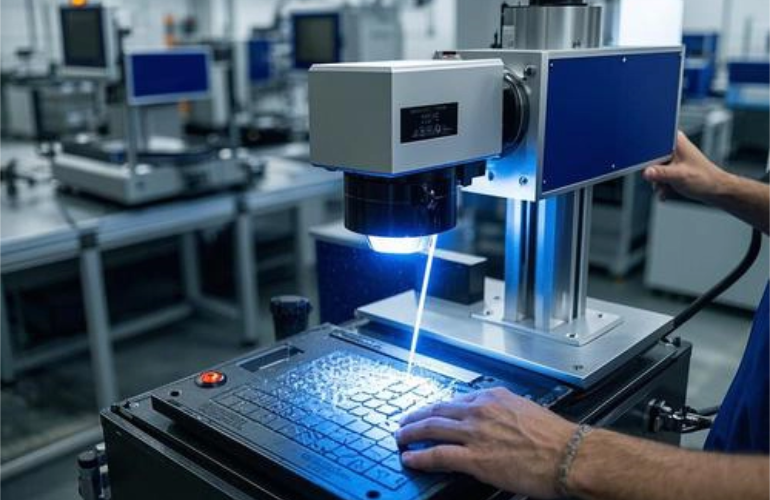
Laser cutting machines, laser welding machines, laser marking machines, laser engraving machines, laser cladding equipmentLaser additive manufacturing (3D printing) equipmentAll industrial machinery that processes materials via laser radiation

1.3 Excluded Scenarios

Lithography, stereolithography and holography equipmentMedical laser devices (subject to IEC 60601-2-22)Data storage laser products


2. Core Objective: Establish a Full-Lifecycle Laser Safety Barrier

The standard follows a core logical framework: hazard identification → risk assessment → risk reduction → verification and validation → user information provision. It covers the entire equipment lifecycle including design, manufacturing, transportation, installation, operation, maintenance and disposal. Its key targets are as follows:
  • Identify all radiation hazards generated by laser processing machines, including direct beams, reflected beams and diffuse reflections

  • Specify safety protection measures and verification methods to restrict human radiation exposure below safe limit values

  • Define mandatory safety information that manufacturers must provide to users to guide safe operation and protective measures


3. Mandatory Core Safety Requirements for Manufacturer Compliance

3.1 Risk Assessment and Hazard Classification (Source Control at Design Stage)

Systematic risk assessment covering the full equipment lifecycle must be performed to identify all laser radiation hazards.Laser safety classes shall be defined in accordance with EN 60825-1 (up to Class 4), with clear laser category and safety threshold specified for each unit.Human radiation exposure levels under both normal and fault operating conditions must not exceed the applicable Exposure Limit Values (ELV).

3.2 Hardware Protection Design (Core Safety Barriers)

(1) Fully Enclosed Protective Housings with Safety Interlocks (Most Critical Requirement)

The laser processing zone must be fully enclosed with interlocked protective housings to avoid radiation leakage.When protective doors or maintenance covers are opened, interlock devices shall immediately terminate laser emission or activate safety shutters to neutralize the optical beam path.The entire optical path system shall be fully enclosed with no radiation leakage points.

(2) Viewing Windows and Protective Materials

Viewing windows must be fabricated from dedicated laser shielding materials matched to the laser wavelength to block hazardous laser radiation.Protective materials shall be marked with protection rating, applicable wavelength range and maximum allowable incident radiation power.

(3) Emergency Stop and Access Control

Independent, reliable emergency stop devices shall be fitted to cut off equipment operation instantly upon activation, with response times complying with standard provisions.For frequent loading and unloading workflows, laser activation controls (foot pedals or physical buttons) may be adopted, but accidental triggering must be prevented; laser emission can only be enabled when protective housings are fully closed.

3.3 Markings and User Information (Operator Safety Safeguards)

Standard laser warning signs (marked with laser class, wavelength, power and other key data) must be affixed to all laser hazard zones, maintenance doors and equipment panels.Comprehensive safety manuals shall be provided, detailing laser safety class, potential hazards, Personal Protective Equipment (PPE) requirements, standard operating procedures, maintenance specifications and fault troubleshooting guidance.Equipment nameplates shall clearly state laser parameters, safety class and compliance statements referencing relevant standards.

3.4 Mandatory Test and Verification Items for Compliance

  • Laser radiation emission testing: Verify radiation levels remain below safety thresholds

  • Protective housing integrity testing: Inspect housings and shielding barriers for radiation leakage

  • Safety interlock functional testing: Confirm laser output is instantly cut off when access covers are opened

  • Emergency stop device testing: Evaluate shutdown response speed and operational reliability

  • Marking and documentation inspection: Ensure warning labels and user manuals meet regulatory clarity requirements


4. Correlation with Other Relevant Standards for Integrated Compliance

  • EN 60825-1: General laser product safety classification, the fundamental basis of this standard

  • EN ISO 12100: General machinery safety risk assessment standard, governing the risk control logic adopted herein

  • ISO 11553-3: Specialized standard governing noise hazard protection for laser processing machines, complementary to this document

  • EU Machinery Directive 2006/42/EC: This standard is the primary route to satisfy the fundamental safety requirements of the directive


5. Compliance Benefits for Manufacturers and End Users

For Manufacturers

  • Secure CE certification market access to the EU and eliminate cross-border trade barriers

  • Establish standardized safety design protocols to reduce product safety accidents and costly product recalls

  • Enhance global product competitiveness and demonstrate corporate safety accountability and technical capabilities

For End Users

  • Guarantee safe equipment operation and prevent laser-induced eye and skin injuries

  • Access complete standardized operation guidance to minimize human error risks

  • Meet EU and international factory safety compliance obligations for production site operations


6. Professional Compliance Services from Zhongwei Inspection

As a specialized service provider for laser safety testing and certification, Zhongwei Inspection delivers end-to-end compliance solutions aligned with EN ISO 11553-1:
  • Laser equipment risk assessment and laser safety classification

  • Protective structure design optimization and rectification guidance

  • Full testing services including radiation emission, interlock function and protective housing integrity

  • One-stop CE certification handling to accelerate market entry into the EU and global regions