




Leveraging our core and differentiated strengths, we provide you with high-quality, comprehensive technology services
More
We provide professional optical product testing services (laser product safety testing and performance parameter testing, photobiological safety testing for non‑laser products), as well as energy efficiency testing services (EU ErP energy efficiency testing, US DOE energy efficiency testing, California CEC energy efficiency testing), among others.
If you have requirements for laser products (laser product safety testing and laser performance parameter testing) and energy efficiency testing (EU ErP energy efficiency testing, US DOE energy efficiency, California CEC energy efficiency, UK energy efficiency testing), please feel free to email us at: admin@ctnt-cert.com




Shenzhen CTNT Zhongwei Inspection (CTNT) is an authoritative third‑party testing organization specializing in laser product testing and certification, holding multiple accreditations including CNAS, IAS, and CMA. We are committed to providing high‑precision, traceable laser degree of polarization testing services for laser manufacturers, research institutions, and import/export enterprises worldwide, helping customers accurately quantify the polarization characteristics of laser beams and delivering core data support for optical system design, nonlinear optics applications, and global market access.
The degree of polarization (DOP) is a physical quantity that describes the purity of the polarization state of a laser beam. It is generally defined as the ratio of the intensity of the fully polarized component to the total intensity, ranging from 0 to 1 (or 0% to 100%):
DOP = 1 (100%): Fully polarized light (linear, circular, or elliptical polarization).
DOP = 0: Completely unpolarized light (natural light).
0 < DOP < 1: Partially polarized light.
Common polarization states of laser output:
Linear polarization: The electric field vector vibrates along a fixed direction – used in frequency doubling, electro‑optic modulation, interferometry.
Circular polarization: The electric field vector rotates – used in laser processing (reducing directional dependence), magneto‑optical storage.
Elliptical polarization: Intermediate between linear and circular – common in some solid‑state lasers.
Random polarization (low DOP): Multi‑mode fiber lasers and some diode lasers often output beams with low degree of polarization.
DOP is an important intrinsic parameter of a laser, influenced by the gain medium, cavity design, and optical components (polarizers, waveplates, etc.).
Performance assurance of optical systems: Many optical components (e.g., polarizing beam splitters, isolators, modulators) are sensitive to the polarization state of incident light. Accurate DOP data helps system matching and performance prediction, avoiding energy loss or functional failure.
Crucial for nonlinear optics: Nonlinear processes such as second‑harmonic generation, sum‑frequency generation, and difference‑frequency generation rely on specific polarization states (typically linear polarization). Deviation from the ideal DOP reduces conversion efficiency or even prevents the desired output.
Impact on laser processing: Circularly polarized light can reduce directional sensitivity in cutting and welding, resulting in more uniform kerfs; linearly polarized light may exhibit anisotropy in certain material processing. Knowing the DOP helps optimize the process.
Measurement and sensing applications: Interferometry, ellipsometry, fiber optic current transformers, etc., all rely on a stable polarization state of the laser. DOP testing can assess the suitability of the light source for such sensors.
R&D and quality control: During laser development, abnormal DOP may indicate cavity stress, thermally induced birefringence, or polarization‑maintaining fiber alignment errors. Regular testing helps diagnose and eliminate issues.
Standards and customer requirements: Although safety standards such as IEC 60825‑1 do not mandate DOP measurements, high‑end research, medical (e.g., ophthalmic surgery), and certain industrial applications often require DOP test reports.
Our laser laboratory is equipped with high‑precision polarization measurement systems capable of accurately determining the DOP and the complete Stokes parameters of a laser beam:
Rotating polarizer measurement system: Consists of a high‑precision motor‑driven linear polarizer (extinction ratio >1000:1) and a power meter. By measuring the transmitted intensity as a function of polarizer angle, the DOP and polarization direction are calculated.
Beam‑splitting polarimeter (polarization state analyzer): Quickly measures the full Stokes parameters (S0, S1, S2, S3) and outputs DOP, ellipticity, and azimuth angle. Suitable for real‑time measurement (including pulsed lasers).
Extinction ratio tester: Specifically designed for testing the extinction ratio (polarization purity) of polarization‑maintaining fiber components or linearly polarized lasers. Directly outputs the DOP.
Quarter‑wave plate and polarizer combination: Manual measurement of circular polarization content – the waveplate and polarizer are rotated to analyze elliptical polarization states.
Standard polarized light source (e.g., polarizing beam splitter + stable laser): Regularly calibrates the accuracy of the measurement system.
We use either the rotating polarizer method or the beam‑splitting polarimeter method according to customer requirements, strictly following standard operating procedures:
Step 1: Requirement communication
Customer provides product specifications and testing purpose (e.g., R&D verification, batch sampling, export certification). Engineers determine the laser wavelength, power range, estimated polarization state (linear/circular/random), and the required output parameters (DOP only or full Stokes parameters).
Step 2: Solution development
For CW or low‑frequency pulsed lasers: Use the rotating polarizer method (low cost, high accuracy).
For fast measurement or high‑repetition‑rate pulsed lasers: Use a beam‑splitting polarimeter (real‑time output).
For polarization‑maintaining fiber output: Prioritize an extinction ratio tester to directly measure the polarization extinction ratio (PER) and then convert to DOP.
Step 3: Sample receipt and environmental preparation
Customer mails or delivers the sample to our laboratory. In a constant‑temperature (23±2)°C, vibration‑free darkroom, the laser is warmed up to stability. The test setup (polarizer + power meter or polarimeter) is placed in the optical path, ensuring the beam is normally incident.
Step 4: System calibration
Verify measurement accuracy using a known DOP reference (e.g., a linearly polarized He‑Ne laser with DOP ≈ 100%). For the rotating polarizer method, calibrate the initial angle reference of the polarizer.
Step 5: Formal testing
Rotating polarizer method: Rotate the polarizer in fixed increments (e.g., 10°) and record the transmitted intensity at each angle. One full rotation (0–180°) yields complete data. Fit the data according to Malus‘s law to obtain the maximum intensity (Imax) and minimum intensity (Imin). Calculate the DOP as P = (Imax – Imin)/(Imax + Imin). Also record the angle corresponding to Imax (polarization direction).
Beam‑splitting polarimeter method: Directly read the DOP value and Stokes parameters from the instrument display. If the laser is pulsed, ensure the instrument’s response speed is sufficient.
To distinguish linear/circular polarization components, insert a quarter‑wave plate into the optical path and repeat the above measurements.
Step 6: Data processing and judgment
Repeat the measurement 3–5 times, then calculate the average DOP and standard deviation. Compare with the customer‘s nominal value. If the DOP is significantly lower than expected, analyze possible causes (thermally induced birefringence, fiber depolarization, cavity stress, etc.).
Step 7: Report issuance
Prepare a detailed bilingual (Chinese/English) test report, including a block diagram of the test system, instrument models, raw data tables (intensity‑vs‑angle curve or Stokes parameters), calculated DOP, and polarization direction (or ellipticity). The report is stamped with CNAS/CMA seals.
Step 8: After‑sales interpretation and support
Engineers interpret the DOP test results, analyze the physical reasons for polarization degradation, and provide improvement recommendations (e.g., cavity adjustment, replacement of polarization‑maintaining components, better temperature control).
Standard turnaround: Test report issued within 5‑7 working days after sample receipt. Expedited service available for urgent projects.
Professional laser laboratory: Equipped with a high‑precision rotating polarizer measurement system and a real‑time polarimeter. Extinction ratio measurement range >60 dB, covering UV to IR wavelengths.
Over 10 years of experience: Core team has more than 10 years of experience in laser polarization characterization, handling numerous cases for solid‑state, fiber, diode, gas lasers, and polarization‑maintaining devices.
Authoritative accreditations: CMA, CNAS, and IAS triple accreditations. Our DOP test data is widely trusted by domestic and international customers and research institutions.
Full parameter coverage: In addition to DOP, we can simultaneously test power, wavelength, spectrum, beam quality, spot profile, and more in a one‑stop service.
Fast response: Dedicated account manager ensures transparent communication. Expedited service available for urgent projects, including in‑depth analysis of polarization anomalies.
Cost‑effective: Saves customers from purchasing expensive polarization measurement equipment, offering flexible test solutions on demand.
Send email inquiry
Fill in testing application form
Confirm quotation and turnaround time
Mail sample
Laboratory testing
Report issuance
After‑sales interpretation and support
Take action – let the degree of polarization become the quantitative proof of your beam’s orientation!
Whether you need to verify the linear polarization purity of a frequency‑doubling laser or determine whether a fiber laser output is nearly randomly polarized, an authoritative laser degree of polarization test report will serve as strong evidence for your optical system compatibility and product quality.
Email us: admin@ctnt-cert.com
Shenzhen CTNT Zhongwei Inspection – Your trusted laser product testing expert – determining the orientation of every beam of your light with precision polarization analysis technology.


Equipped with 10+ dedicated labs — including consumer/medical/industrial laser labs, beam performance, spectral, pulse, and electrical safety labs — we cover a full range of laser safety and performance parameters (wavelength, power, divergence, pulse energy, beam quality, etc.).


Holding CNAS (ISO/IEC 17025), U.S. IAS, and CMA certifications. Our testing complies with IEC 60825-1, EN 60825-1, FDA 21 CFR 1040.10, GB/T 7247.1, and major energy efficiency programs (DOE, CEC, ERP).


From product testing and technical document review to certification application and energy efficiency label registration (US DOE, CEC, EU ERP) — we streamline your path to global markets.
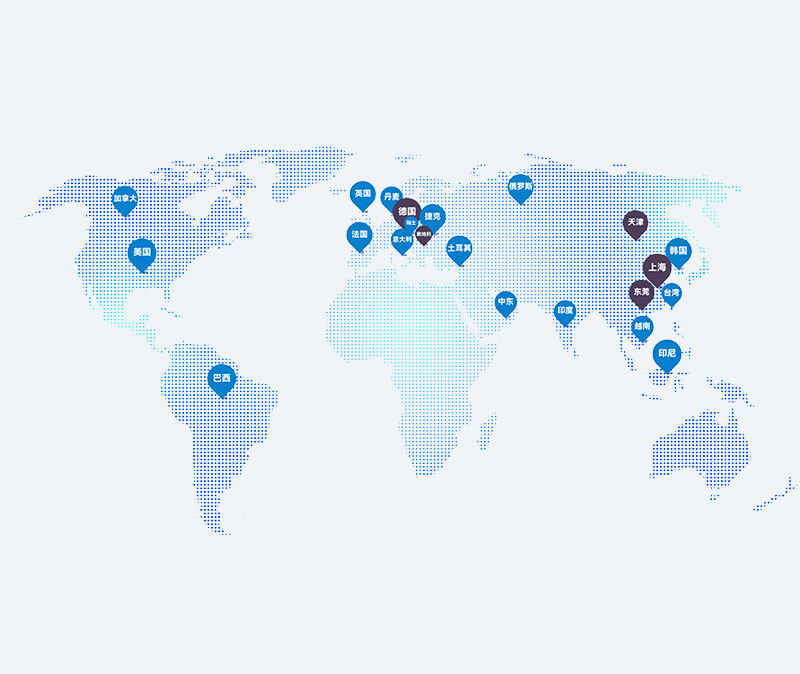
We are ready to respond promptly to your needs and provide professional services.
Copyright © 2026 Shenzhen Zhongwei Testing Technology Co.,Ltd.