




Leveraging our core and differentiated strengths, we provide you with high-quality, comprehensive technology services
More
We provide professional optical product testing services (laser product safety testing and performance parameter testing, photobiological safety testing for non‑laser products), as well as energy efficiency testing services (EU ErP energy efficiency testing, US DOE energy efficiency testing, California CEC energy efficiency testing), among others.
If you have requirements for laser products (laser product safety testing and laser performance parameter testing) and energy efficiency testing (EU ErP energy efficiency testing, US DOE energy efficiency, California CEC energy efficiency, UK energy efficiency testing), please feel free to email us at: admin@ctnt-cert.com




Shenzhen CTNT Zhongwei Inspection (CTNT) is an authoritative third‑party testing organization specializing in laser product testing and certification, holding multiple accreditations including CNAS, IAS, and CMA. We are committed to providing high‑resolution, traceable laser spot size testing services for laser equipment manufacturers, research institutions, and import/export enterprises worldwide, helping customers accurately determine the actual focused spot size at the focal plane or working distance. This delivers critical data support for precision machining process optimization, equipment acceptance, and global market access.
Laser spot size refers to the spatial diameter corresponding to the intensity distribution of a laser beam on a specific plane (typically the focal plane of a focusing lens or the working distance of a laser processing head), usually expressed in micrometers (μm) or millimeters (mm). It is a core parameter that directly affects processing accuracy in actual laser applications.
Commonly used definitions:
1/e² diameter: The width at which the intensity drops to 1/e² (≈13.5%) of the peak value. Suitable for describing the focused spot of a Gaussian beam.
Full Width at Half Maximum (FWHM): The width at half the peak intensity. For a Gaussian beam, FWHM ≈ 0.707 × (1/e² diameter).
D4σ diameter: The four‑times second‑moment width defined by ISO 11146, applicable to any beam shape.
Knife‑edge 10/90 diameter: The travel distance over which the transmission rises from 10% to 90%, often used for fast on‑site evaluation.
For laser cutting, drilling, welding, and other applications, the focused spot size directly determines the minimum processing line width and the heat‑affected zone, making it one of the most closely watched technical indicators.
Determinant of processing precision: In laser micro‑machining, spot size directly determines the achievable line width, hole diameter, and sidewall quality. For example, flexible PCB drilling requires a spot size <20 μm, and vascular stent cutting requires a spot size ≈10 μm. Accurate spot size measurement is the first step in process feasibility verification.
Basis for equipment performance acceptance: During factory acceptance or on‑site acceptance of laser equipment, focused spot size is one of the core performance indicators. An authoritative test report serves as a technical consensus between buyer and seller, avoiding later disputes.
Foundation for process parameter optimization: By measuring the spot size at different defocus distances, the optimal focal plane position can be found, and parameters such as cutting speed and assist gas pressure can be optimized to improve processing efficiency and yield.
Optical system debugging and diagnosis: When the focused spot becomes abnormally large or distorted, it may indicate lens contamination, thermal lensing, collimation mismatch, etc. Regular testing helps preventive maintenance.
Customer and bidding requirements: When high‑end manufacturing industries (e.g., automotive, aerospace, medical devices) purchase laser equipment, they often require a third‑party test report for focused spot size. Some export certifications also require clear spot size data.
Our laser laboratory is equipped with high‑resolution beam analysis systems suitable for focused spot measurement, covering a range from a few micrometers to several millimeters:
High‑magnification microscope with CCD camera: The focused spot is magnified by an objective lens, and the image is captured by a pixel‑calibrated camera. Software calculates the spot diameter. Suitable for micron‑sized small spots (minimum measurable ~1 μm).
Beam profiler (direct imaging): The focused spot is directly projected onto the detector. Suitable when the spot size is larger than the detector pixel pitch (typically >50 μm).
Knife‑edge / slit scanning beam profiler: Mechanical scanning method; spatial resolution can reach sub‑micron, not limited by pixels. Suitable for measuring high‑power‑density focused spots.
Motorized slit and photodetector: A precision translation stage moves a slit (or pinhole) in two dimensions to reconstruct the energy distribution of the spot – highest accuracy but longer measurement time.
Standard calibration target (e.g., USAF resolution chart): Used to calibrate the magnification and pixel size of the microscope imaging system.
We select the most appropriate test method based on the estimated spot size, laser power, and site conditions, strictly following standard operating procedures:
Step 1: Requirement communication
Customer provides product specifications and testing purpose (e.g., equipment acceptance, process optimization, fault diagnosis). Engineers determine laser wavelength, power range, estimated focused spot size (e.g., <100 μm or >1 mm), lens parameters, and working distance.
Step 2: Solution development
Small spot (<100 μm): Use microscope + CCD method, select appropriate objective magnification.
Medium spot (0.1–2 mm): Use beam profiler directly (CCD or knife‑edge type).
Large spot (>2 mm): Use CCD camera with beam expansion or direct imaging.
High power density: Use knife‑edge scanning or image after adding attenuators to avoid detector damage.
Step 3: Sample receipt and environmental preparation
Customer mails or delivers the laser / laser processing head to our laboratory. Set up the test optical path in a constant‑temperature (23±2)°C, dust‑free darkroom. For focused spot testing, the focusing lens (or the customer‘s own processing head) is fixed on an optical table, and the detector is placed near the focal plane.
Step 4: System alignment and calibration
Adjust the optical path so that the laser beam is perpendicularly incident on the focusing element and ensure that the detector’s sensing surface coincides with the focal plane (find the minimum spot position by moving the stage).
Calibrate the microscope magnification (image a standard scale) or the camera pixel equivalent.
Set appropriate attenuation to ensure the detector is neither saturated nor too weak.
Step 5: Formal testing
Microscope + CCD method: Capture focused spot images. Software automatically calculates the diameter using the 1/e² or FWHM algorithm. Capture multiple consecutive frames (e.g., 10 frames) and average the results. Record the major and minor axes for elliptical spots.
Direct imaging method: Project the spot onto a beam profiler. Calculate the diameter using D4σ or 1/e².
Knife‑edge scanning method: Move the knife‑edge in the X and Y directions, record the power variation curve, and calculate the diameter using the 10/90 or 1/e² threshold.
To evaluate the depth of focus, move the detector along the Z axis (± Rayleigh length range), measure the spot size at different defocus positions, and plot a curve of diameter vs. position.
Step 6: Data processing and judgment
Calculate the average spot diameter and standard deviation. Compare with the customer‘s nominal value or process requirements. If the spot is oversized, elliptical, or shows side lobes, record and analyze the causes in detail.
Step 7: Report issuance
Prepare a detailed bilingual (Chinese/English) test report, including a test optical diagram, instrument parameters, raw spot images (or scanning curves), calculation method, and final diameter results. The report is stamped with CNAS/CMA seals.
Step 8: After‑sales interpretation and support
Engineers interpret the spot size test results, analyze factors affecting spot quality (e.g., aberrations, thermal lensing, collimation deviation, lens contamination), and provide improvement recommendations.
Standard turnaround: Test report issued within 5‑7 working days after sample receipt. Expedited service available for urgent projects.
Professional laser laboratory: Equipped with high‑magnification microscopes (up to 1000×, resolution <1 μm), high‑precision knife‑edge scanners, and CCD beam profilers – covering full‑range focused spot measurement from microns to millimeters.
Over 10 years of experience: Core team has more than 10 years of experience in laser processing equipment testing, having handled focused spot test cases for UV, green, and IR wavelengths, as well as CW and pulsed modes.
Authoritative accreditations: CMA, CNAS, and IAS triple accreditations. Our test data is widely trusted by domestic and international equipment purchasers and certification bodies.
Full parameter coverage: In addition to spot size, we can simultaneously test power density, focus position (focal plane shift), beam quality M², ellipticity, and more in a one‑stop service.
Fast response: Dedicated account manager ensures transparent communication. Expedited service available for urgent projects, and on‑site testing can be arranged for large equipment.
Cost‑effective: Saves customers from purchasing expensive high‑magnification microscopes, beam profilers, and supporting software, offering flexible test solutions on demand.
Send email inquiry
Fill in testing application form
Confirm quotation and turnaround time
Mail sample (or schedule on‑site visit)
Laboratory testing
Report issuance
After‑sales interpretation and support
Take action – let spot size become the millimeter‑scale ruler of your precision processing!
Whether you need to verify that a UV laser drilling machine can achieve a 10 μm aperture or to measure whether the focused spot size of a high‑power cutting machine meets the supplier‘s promise, an authoritative laser spot size test report will serve as direct evidence of your process capability and equipment accuracy.
Email us: admin@ctnt-cert.com
Shenzhen CTNT Zhongwei Inspection – Your trusted laser product testing expert – restoring the true focused profile of every beam of your light with microscopic precision.


Equipped with 10+ dedicated labs — including consumer/medical/industrial laser labs, beam performance, spectral, pulse, and electrical safety labs — we cover a full range of laser safety and performance parameters (wavelength, power, divergence, pulse energy, beam quality, etc.).


Holding CNAS (ISO/IEC 17025), U.S. IAS, and CMA certifications. Our testing complies with IEC 60825-1, EN 60825-1, FDA 21 CFR 1040.10, GB/T 7247.1, and major energy efficiency programs (DOE, CEC, ERP).


From product testing and technical document review to certification application and energy efficiency label registration (US DOE, CEC, EU ERP) — we streamline your path to global markets.
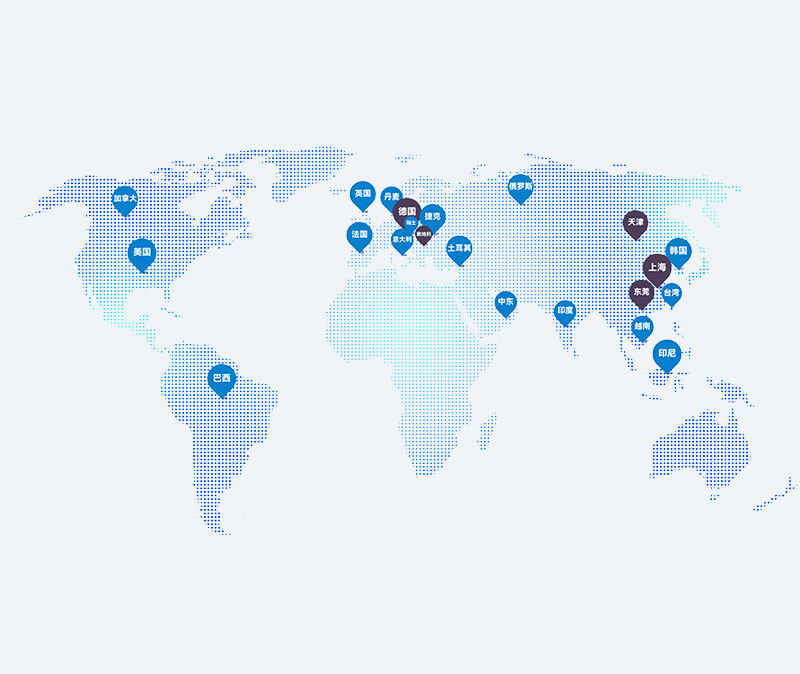
We are ready to respond promptly to your needs and provide professional services.
Copyright © 2026 Shenzhen Zhongwei Testing Technology Co.,Ltd.