




Leveraging our core and differentiated strengths, we provide you with high-quality, comprehensive technology services
More
We provide professional optical product testing services (laser product safety testing and performance parameter testing, photobiological safety testing for non‑laser products), as well as energy efficiency testing services (EU ErP energy efficiency testing, US DOE energy efficiency testing, California CEC energy efficiency testing), among others.
If you have requirements for laser products (laser product safety testing and laser performance parameter testing) and energy efficiency testing (EU ErP energy efficiency testing, US DOE energy efficiency, California CEC energy efficiency, UK energy efficiency testing), please feel free to email us at: admin@ctnt-cert.com




Shenzhen CTNT Zhongwei Inspection (CTNT) is an authoritative third‑party testing organization specializing in laser product testing and certification, holding multiple accreditations including CNAS, IAS, and CMA. We are committed to providing high‑resolution, high‑precision laser spectral width testing services for laser manufacturers, research institutions, and import/export enterprises worldwide, helping customers accurately quantify the spectral purity of lasers and delivering core data support for coherent detection, precision metrology, fiber optic communications, and global market access.
Laser spectral width (also called laser linewidth) refers to the spectral distribution range of laser radiation, usually expressed as the Full Width at Half Maximum (FWHM) at the peak wavelength, with units of nanometers (nm), picometers (pm), or megahertz (MHz) (in the frequency domain). It is a core parameter describing the monochromaticity of a laser; the narrower the spectral width, the better the coherence and the “purer” the color.
Common classifications:
Ultra‑narrow linewidth lasers (<1 kHz, sub‑fm level): Used in atomic clocks, precision spectroscopy, gravitational wave detection.
Narrow linewidth lasers (a few kHz to a few MHz): Used in coherent communications, fiber optic sensing, LiDAR.
Ordinary single‑longitudinal‑mode lasers (a few MHz to tens of MHz): Used in interferometry, Raman spectroscopy.
Multi‑longitudinal‑mode lasers (0.1 nm to several nm): Used in marking, cutting, pumping.
Broadband lasers (tens of nm): Used in tunable lasers, supercontinuum sources.
Spectral width can also be classified as time‑domain linewidth (related to coherence time) and time‑averaged spectral width (measured by conventional spectrometers). We provide corresponding test solutions according to customer requirements.
Quantitative measure of monochromaticity: Spectral width directly determines the coherence length and frequency stability of a laser. For interferometry, holography, and fiber optic gyroscopes, narrow linewidth is a prerequisite for technical feasibility.
Core of communication and sensing: In DWDM optical communications, laser linewidth affects channel crosstalk and transmission distance; in distributed fiber sensing, linewidth determines the resolution of Brillouin scattering spectra.
Critical for LiDAR performance: For FMCW LiDAR, the linewidth of the frequency‑modulated continuous wave directly affects ranging resolution and signal‑to‑noise ratio.
Differences in material interaction: Broadband lasers (e.g., supercontinuum) are used in spectral imaging; narrow‑spectrum lasers are used for resonant excitation and Raman detection. Spectral width is also related to processing effects (e.g., photoluminescence, thermal effects).
Standards and compliance: While standards such as IEC 60825‑1 and GB/T 7247.1 do not mandate spectral width testing for classification and risk assessment, high‑end equipment procurement, research projects, and certain medical applications (e.g., ophthalmology) often require spectral width data. Some export certifications also require a clear wavelength range.
Our laser laboratory is equipped with multi‑level spectral analysis systems covering measurement needs from sub‑pm to tens of nm:
High‑resolution spectrometer: Based on grating dispersion and CCD arrays, resolution down to 0.01 nm (10 pm) – suitable for most ordinary lasers (>0.1 nm).
Fabry‑Perot interferometer (scanning type): Adjustable free spectral range, high finesse, capable of measuring very narrow linewidths (kHz to MHz) and analyzing longitudinal mode structure.
Wavemeter (high‑precision type): Simultaneously measures absolute wavelength and linewidth, accuracy up to ±0.0001 nm (0.1 pm) – suitable for single‑longitudinal‑mode lasers.
Self‑heterodyne / self‑homodyne detection system: Measures laser phase noise via delayed self‑heterodyne technique and derives linewidth (in Hz) – used for ultra‑narrow linewidth measurement (<1 MHz).
Standard light source (frequency‑stabilized He‑Ne laser or molecular absorption cell): Regularly calibrates the wavelength accuracy and resolution of the spectrometer.
We select the most appropriate test method based on the estimated spectral width and the customer‘s accuracy requirements:
Step 1: Requirement communication
Customer provides product specifications and testing purpose. Engineers determine the laser wavelength range, estimated linewidth (broad >0.1 nm, narrow <0.1 nm, or linewidth in frequency domain), output power, and whether it is single‑longitudinal‑mode.
Step 2: Solution development
Broadband (>0.01 nm): Use high‑resolution spectrometer to directly measure FWHM.
Medium linewidth (0.001–0.01 nm): Use a wavemeter or a high‑finesse scanning F‑P interferometer.
Ultra‑narrow linewidth (<1 MHz): Use the delayed self‑heterodyne method (requires an optical fiber delay line).
To understand the longitudinal mode spacing, use an F‑P interferometer to measure multiple longitudinal modes simultaneously.
Step 3: Sample receipt and environmental preparation
Customer mails or delivers the sample to our laboratory. In a constant‑temperature (23±1)°C, vibration‑free optical environment, couple the laser into the spectrometer via fiber or free‑space optics. For narrow linewidth tests, avoid environmental vibrations and temperature drift.
Step 4: System calibration
Calibrate the spectrometer wavelength reading using a standard light source of known wavelength (e.g., neon lamp or frequency‑stabilized laser). For an F‑P interferometer, calibrate the free spectral range and finesse.
Step 5: Formal testing
Spectrometer method: Input the laser into the spectrometer, select an appropriate integration time and resolution (resolution should be less than 1/5 of the expected linewidth). Record the spectral curve; the software automatically reads the peak wavelength and FWHM. If multiple peaks exist (multi‑longitudinal‑mode), provide the linewidth of each longitudinal mode as well as the overall envelope width.
F‑P interferometer method: Scan the interferometer, record the transmission peaks. Calculate the finesse from the FWHM of the peaks divided by the free spectral range, then convert to linewidth.
Delayed self‑heterodyne method (ultra‑narrow linewidth): Split the laser beam, pass one path through a long fiber delay, then beat it with the other path. Measure the linewidth of the beat signal using a spectrum analyzer and invert to obtain the laser linewidth based on the delay time.
Step 6: Data processing and judgment
Calculate the average spectral width, noting the measurement method (FWHM or 20 dB width, etc.). Compare with the customer‘s nominal value to determine compliance. For ultra‑narrow linewidth, the report must state the resolution limit of the measurement system.
Step 7: Report issuance
Prepare a detailed bilingual (Chinese/English) test report, including a block diagram of the test system, instrument models, raw spectra (or interference fringes/beat frequency spectrum), linewidth calculation process, and final results. The report is stamped with CNAS/CMA seals.
Step 8: After‑sales interpretation and support
Engineers interpret the linewidth data, analyze possible causes of spectral broadening (e.g., temperature fluctuations, current noise, insufficient cavity Q‑factor, longitudinal mode competition), and provide optimization recommendations.
Standard turnaround: Test report issued within 5‑7 working days after sample receipt (ultra‑narrow linewidth tests require extra fiber delay setup and may take slightly longer). Expedited service available for urgent projects.
Professional laser laboratory: Equipped with high‑resolution spectrometers (resolution 0.01 nm), scanning F‑P interferometers, and fiber‑based delayed self‑heterodyne systems – covering full spectral width testing from sub‑pm to nm levels.
Over 10 years of experience: Core team has more than 10 years of experience in laser spectral testing, having handled linewidth measurements for DFB lasers, fiber lasers, semiconductor lasers, ultrafast lasers, and many other types.
Authoritative accreditations: CMA, CNAS, and IAS triple accreditations. Our test data is widely trusted by domestic and international research institutions and high‑end manufacturing customers.
Full parameter coverage: In addition to spectral width, we can simultaneously test center wavelength, peak power, side‑mode suppression ratio (SMSR), beam quality, and more in a one‑stop service.
Fast response: Dedicated account manager ensures transparent communication, offering customised solutions from broadband to ultra‑narrow linewidth.
Cost‑effective: Saves customers from purchasing expensive spectral analysis and narrow‑linewidth measurement equipment, providing flexible services on demand.
Send email inquiry
Fill in testing application form
Confirm quotation and turnaround time
Mail sample
Laboratory testing
Report issuance
After‑sales interpretation and support
Take action – let spectral width become the gold label of your laser’s purity!
Whether you need to verify that the single‑mode linewidth of a DFB laser meets coherent communication requirements or to measure the spectral width variation of a tunable laser across its tuning range, an authoritative laser spectral width test report will serve as a trusted basis for the monochromatic quality of your product.
Email us: admin@ctnt-cert.com
Shenzhen CTNT Zhongwei Inspection – Your trusted laser product testing expert – capturing the colour purity of every beam of your light with precision spectroscopy technology.


Equipped with 10+ dedicated labs — including consumer/medical/industrial laser labs, beam performance, spectral, pulse, and electrical safety labs — we cover a full range of laser safety and performance parameters (wavelength, power, divergence, pulse energy, beam quality, etc.).


Holding CNAS (ISO/IEC 17025), U.S. IAS, and CMA certifications. Our testing complies with IEC 60825-1, EN 60825-1, FDA 21 CFR 1040.10, GB/T 7247.1, and major energy efficiency programs (DOE, CEC, ERP).


From product testing and technical document review to certification application and energy efficiency label registration (US DOE, CEC, EU ERP) — we streamline your path to global markets.
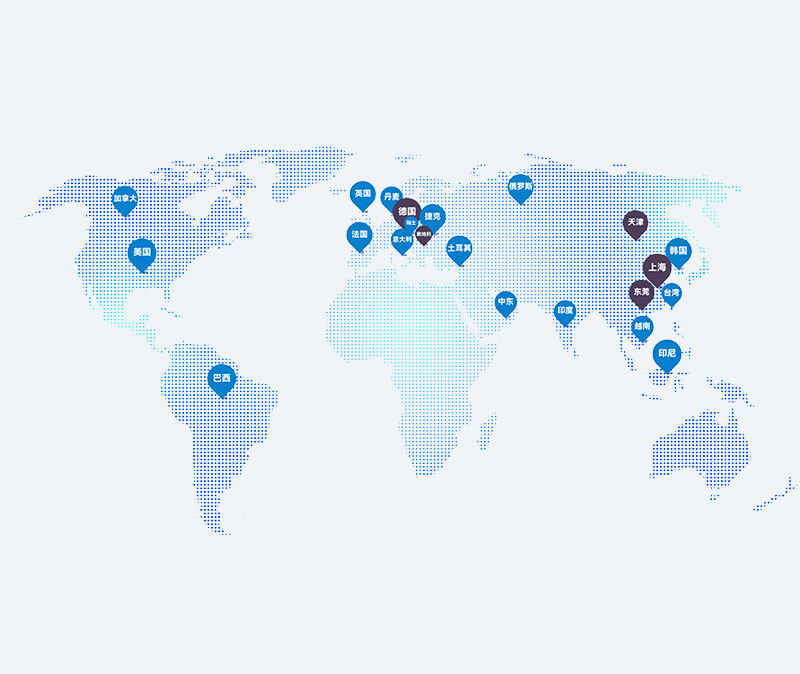
We are ready to respond promptly to your needs and provide professional services.
Copyright © 2026 Shenzhen Zhongwei Testing Technology Co.,Ltd.