




Leveraging our core and differentiated strengths, we provide you with high-quality, comprehensive technology services
More
We provide professional optical product testing services (laser product safety testing and performance parameter testing, photobiological safety testing for non‑laser products), as well as energy efficiency testing services (EU ErP energy efficiency testing, US DOE energy efficiency testing, California CEC energy efficiency testing), among others.
If you have requirements for laser products (laser product safety testing and laser performance parameter testing) and energy efficiency testing (EU ErP energy efficiency testing, US DOE energy efficiency, California CEC energy efficiency, UK energy efficiency testing), please feel free to email us at: admin@ctnt-cert.com




Shenzhen CTNT Zhongwei Inspection (CTNT) is an authoritative third‑party testing organization specializing in laser product testing and certification, holding multiple accreditations including CNAS, IAS, and CMA. We are committed to providing high‑resolution, visual laser intensity distribution testing services for laser manufacturers, research institutions, and import/export enterprises worldwide, helping customers fully grasp the energy distribution characteristics of the laser beam cross‑section and delivering intuitive, authoritative data support for optical design optimization, product consistency control, and global market access.
Laser intensity distribution (also called beam cross‑section energy distribution or spot energy distribution) describes how the intensity of a laser beam varies with spatial coordinates on a plane perpendicular to the propagation direction. It reflects the concentration and uniformity of laser energy within the spot and is typically presented as 2D false‑color maps, 3D surface plots, or cross‑sectional profile curves.
Common intensity distribution patterns:
Gaussian distribution (near‑ideal single mode): Strongest at the center, smoothly decaying toward the edges – used in high‑precision processing, fiber coupling.
Flat‑top distribution: Uniform energy in the center with steep edges – used in laser heat treatment, medical aesthetics.
Multi‑mode distribution: Multi‑peaked, dispersed energy – typical of high‑power multi‑mode lasers and laser diode arrays.
Annular or asymmetric distribution: May indicate astigmatism, aberrations, or thermal lensing.
Visualization of beam quality: Intensity distribution is a direct representation of the “beam shape” – more intuitive than single‑number parameters (e.g., M², divergence). A high‑quality intensity distribution map is a highlight in product datasheets and promotional materials.
Determinant of process outcomes: In laser cutting, welding, and marking, intensity distribution directly affects kerf width, heat‑affected zone, and processing consistency. For example, a Gaussian focal spot is better for precision cutting, while a flat‑top profile suits surface treatment. Testing helps match optimal process parameters.
Basis for optical system alignment: After the beam passes through lenses, fibers, beam expanders, etc., the intensity distribution may degrade (e.g., side lobes, distortions). Testing verifies optical component quality and assists system calibration.
Product consistency verification: In mass production, consistency of intensity distribution reflects the stability of laser cavity assembly and optical component quality. Regular sampling reveals potential deviations.
Compliance and customer requirements: Some high‑end laser equipment purchasers and research projects explicitly require intensity distribution test reports. Standards such as ISO 13694 provide evaluation methods for laser beam energy distribution.
Our laser laboratory is equipped with professional beam analysis systems capable of accurately capturing and analyzing laser spot shapes from UV to IR:
Beam profiler (CCD/CMOS camera type): Includes high‑dynamic‑range camera, attenuation components, and dedicated analysis software. Pixel size down to micrometer level, real‑time display of 2D intensity distribution, 3D plot, cross‑sectional curves, beam ellipticity, etc.
Slit/knife‑edge beam profiler: Suitable for high‑power lasers or UV/deep‑UV wavelengths (where cameras may have low response). Reconstructs intensity distribution by mechanical scanning – larger measurement range, low risk of surface damage.
Thermal spot analyzer: Used for mid‑ and far‑infrared wavelengths (e.g., CO₂ laser at 10.6 μm). Directly captures spot shape via heat‑sensitive material.
Wavefront sensor (optional): Acquires phase information alongside intensity distribution, assisting aberration evaluation.
Standard reference apertures and alignment tools: Ensure the profiler is perpendicular to the optical axis and the sampling area covers at least 1.5× the spot size.
We strictly follow ISO 13694 or customer‑specified methods, implementing a standardized testing procedure:
Step 1: Requirement communication
Customer provides product specifications and testing purpose (e.g., R&D debugging, factory acceptance, customer demonstration, certification). Engineers determine laser wavelength, power range, estimated spot size, and whether pulsed or CW.
Step 2: Solution development
Select appropriate beam profiler based on laser power and wavelength: CCD camera for low‑power CW/pulsed; for high power, add attenuation or use a knife‑edge profiler; for IR bands, use thermal paper or dedicated camera. Determine whether an integrating sphere or beam reducer is needed.
Step 3: Sample receipt and environmental preparation
Customer mails or delivers the sample to our laboratory. In a constant‑temperature (23±2)°C, dust‑free darkroom, set up an optical table, mount the profiler with its detection plane perpendicular to the optical axis, and secure it. Set appropriate attenuation so that the peak intensity stays within the linear range of the detector.
Step 4: System alignment and background subtraction
Adjust the profiler position to center the spot. Turn off the laser, acquire and subtract background noise. Turn on the laser, warm it up to stable operation.
Step 5: Formal testing
For CW laser: Directly capture the spot image. The software automatically generates a 2D false‑color map, a 3D mesh plot, and X‑Y cross‑sectional profiles.
For pulsed laser: Set camera synchronization triggering (or multiple accumulation) to capture single‑pulse or multi‑pulse averaged intensity distribution as required.
Record key data: spot diameter (D4σ or 1/e²), ellipticity, peak position, uniformity (flat‑top fit), side‑lobe ratio, etc.
For dynamic stability evaluation, capture multiple frames (e.g., 100) and calculate spot jitter, centroid shift.
Step 6: Data processing and analysis
Output high‑resolution intensity distribution images (JPEG/PNG/BMP). Extract parameters of interest: spot size at FWHM, energy concentration (e.g., power‑in‑the‑bucket ratio), etc. Compare with customer specifications or ideal shapes to determine compliance.
Step 7: Report issuance
Prepare a detailed bilingual (Chinese/English) test report, including test conditions, instrument information, raw false‑color spot image (with color bar), 3D surface plot, cross‑sectional profile data, and a table of key parameters. The report is stamped with CNAS/CMA seals.
Step 8: After‑sales interpretation and support
Engineers interpret the intensity distribution characteristics (e.g., ellipticity, side lobes, flat‑top quality), analyze causes of anomalies (e.g., optical contamination, misalignment, thermal lensing), and provide optimization recommendations.
Standard turnaround: Test report issued within 5‑7 working days after sample receipt. Expedited service available for urgent projects.
Professional laser laboratory: Equipped with high‑resolution beam profilers (pixel size ≤4.5 μm, dynamic range ≥60 dB) and infrared thermal analysis systems, covering wavelengths from 405 nm to 10.6 μm.
Over 10 years of experience: Core team has more than 10 years of laser beam diagnostic experience, handling intensity distribution tests for everything from single‑mode fibers to high‑power multi‑mode lasers, and from CW to femtosecond pulsed.
Authoritative accreditations: CMA, CNAS, and IAS triple accreditations. Our test reports and intensity distribution images are widely trusted by high‑end domestic and international customers.
Full parameter coverage: In addition to intensity distribution, we can simultaneously test power, wavelength, divergence angle, M², spot diameter, ellipticity, and more in a one‑stop service.
Fast response: Dedicated account manager ensures transparent communication. High‑resolution image files (TIF/BMP) are provided for customer use in marketing or technical documentation.
Cost‑effective: Saves customers from purchasing expensive beam analysis equipment and software, offering flexible testing and image output services on demand.
Send email inquiry
Fill in testing application form
Confirm quotation and turnaround time
Mail sample
Laboratory testing (image acquisition and data analysis)
Report issuance (including intensity distribution images)
After‑sales interpretation and support
Take action – let intensity distribution become the best portrait of your beam profile!
Whether you need to showcase the perfect Gaussian shape of a single‑mode fiber laser or verify the flat‑top uniformity of a high‑power laser diode, an authoritative laser intensity distribution test report and high‑resolution spot image will serve as visual proof of your product‘s quality.
Email us: admin@ctnt-cert.com
Shenzhen CTNT Zhongwei Inspection – Your trusted laser product testing expert – restoring the profile of every beam of your light with high‑definition imaging.


Equipped with 10+ dedicated labs — including consumer/medical/industrial laser labs, beam performance, spectral, pulse, and electrical safety labs — we cover a full range of laser safety and performance parameters (wavelength, power, divergence, pulse energy, beam quality, etc.).


Holding CNAS (ISO/IEC 17025), U.S. IAS, and CMA certifications. Our testing complies with IEC 60825-1, EN 60825-1, FDA 21 CFR 1040.10, GB/T 7247.1, and major energy efficiency programs (DOE, CEC, ERP).


From product testing and technical document review to certification application and energy efficiency label registration (US DOE, CEC, EU ERP) — we streamline your path to global markets.
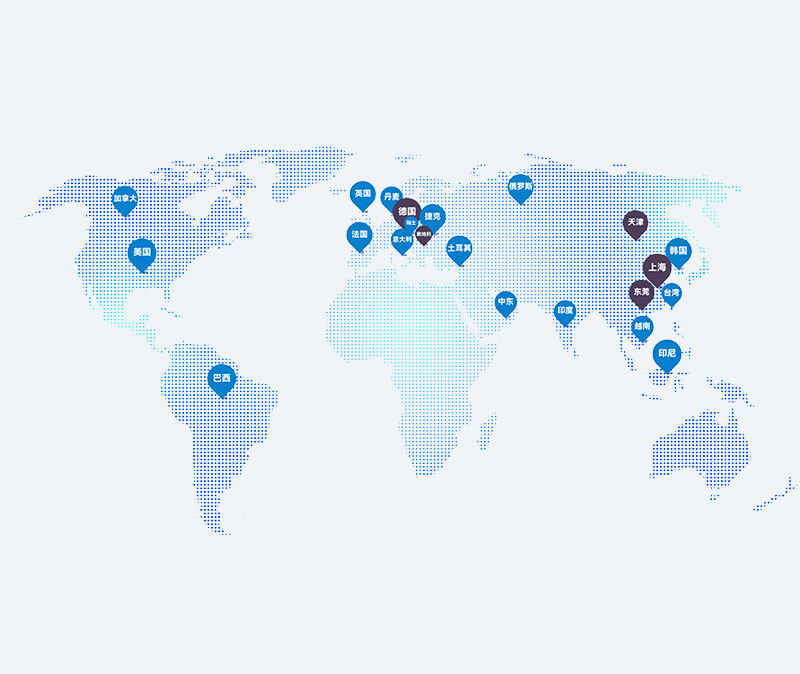
We are ready to respond promptly to your needs and provide professional services.
Copyright © 2026 Shenzhen Zhongwei Testing Technology Co.,Ltd.