




Leveraging our core and differentiated strengths, we provide you with high-quality, comprehensive technology services
More
We provide professional optical product testing services (laser product safety testing and performance parameter testing, photobiological safety testing for non‑laser products), as well as energy efficiency testing services (EU ErP energy efficiency testing, US DOE energy efficiency testing, California CEC energy efficiency testing), among others.
If you have requirements for laser products (laser product safety testing and laser performance parameter testing) and energy efficiency testing (EU ErP energy efficiency testing, US DOE energy efficiency, California CEC energy efficiency, UK energy efficiency testing), please feel free to email us at: admin@ctnt-cert.com




Shenzhen CTNT Zhongwei Inspection (CTNT) is an authoritative third‑party testing organization specializing in laser product testing and certification, holding multiple accreditations including CNAS, IAS, and CMA. We are committed to providing high‑precision, wide‑bandwidth laser pulse repetition rate testing services for pulsed laser manufacturers, research institutions, and import/export enterprises worldwide, helping customers accurately master pulse timing characteristics and providing core data support for LiDAR, high‑speed processing, ranging/communication, and global market access.
Laser pulse repetition rate refers to the number of pulses emitted by a laser per unit time, usually expressed in Hertz (Hz), kilohertz (kHz), or megahertz (MHz). It is a fundamental parameter describing the time‑domain distribution of pulsed lasers, reflecting the operating rhythm of the laser.
For continuously pulsed lasers (e.g., Q‑switched, mode‑locked, gain‑switched lasers), the repetition rate is either fixed or adjustable. Typical ranges:
Low frequency: 1 Hz – 1 kHz (single‑pulse drilling, ranging)
Medium frequency: 1 kHz – 100 kHz (laser marking, cleaning)
High frequency: 100 kHz – 1 MHz (high‑speed processing, micro‑structuring)
Ultra‑high frequency: >1 MHz (mode‑locked lasers, up to tens of MHz or even GHz)
Core of operating rhythm: Repetition rate determines the laser’s operating speed, directly affecting processing efficiency (e.g., marking speed, cutting speed) and data sampling rate (e.g., LiDAR point cloud density).
Key to process matching: Different applications require different repetition rates. For example, low frequency suits deep drilling (longer heat dissipation time), while high frequency suits high‑speed scanning and surface treatment. Accurate repetition rate testing is a prerequisite for process parameter optimization.
Basis for system integration: When synchronizing with galvanometers, motion platforms, or data acquisition systems, the accuracy of the repetition rate directly impacts synchronization control and processing consistency.
R&D and quality control: Fluctuations in repetition rate can indicate power supply instability, aging Q‑switches, or mode‑locking loss. Regular testing helps fault diagnosis and performance maintenance.
Standards and compliance: Standards such as IEC 60825‑1 and GB/T 7247.1 relate laser safety classification limits (especially for Class 3R/3B/4) to repetition rate, pulse width, and peak power. Export certification often requires repetition rate test data.
Our laser laboratory is equipped with wide‑bandwidth, high‑precision time‑frequency measurement systems, ensuring accurate capture of repetition rates from single‑pulse up to hundreds of MHz:
High‑speed photodetector: Wavelength coverage from UV to IR, rise time as fast as nanoseconds/picoseconds, accurately reproducing pulse trains.
High‑bandwidth oscilloscope: Bandwidth ≥500 MHz (1 GHz recommended), capable of displaying pulse waveforms in real time, directly measuring pulse intervals and converting to repetition rate.
Frequency counter / time interval analyzer: Resolution up to 12 digits/second, suitable for high‑precision measurement (e.g., long‑term stability and jitter of repetition rate).
Spectrum analyzer: Used to evaluate frequency‑domain characteristics of the pulse train, detecting harmonics, parasitic modulation, etc.
Standard pulse signal source: Regular calibration of the test system ensures frequency error within ±0.1%.
We select the appropriate measurement method based on the frequency range and accuracy requirements:
Step 1: Requirement communication
Customer provides product specifications and testing purpose (e.g., factory acceptance, process optimization, certification application). Engineers determine laser type, estimated repetition rate range, pulse width, and output power.
Step 2: Solution development
For low frequency (<1 MHz): Use an oscilloscope to directly measure pulse intervals and convert to frequency.
For high frequency (≥1 MHz): Use a frequency counter or spectrum analyzer for higher accuracy. If jitter or stability evaluation is needed, add long‑term sampling.
Step 3: Sample receipt and environmental preparation
Customer mails or delivers the sample to our laboratory. In a constant‑temperature (23±2)°C, electromagnetically shielded environment, connect the detector to the oscilloscope/counter. Warm up the laser to thermal stability.
Step 4: System calibration
Verify the time‑base accuracy of the oscilloscope/counter using a standard pulse signal source. Check that the bandwidth of the detector and cables is sufficient to avoid waveform distortion that could cause triggering errors.
Step 5: Formal testing
Oscilloscope method: After attenuation, direct the laser output onto the detector. Capture a train of consecutive pulses on the oscilloscope. Measure the time interval (∆t) between adjacent pulses; repetition rate f = 1/∆t. Average at least 10 intervals, and record the maximum, minimum, and standard deviation (to quantify jitter).
Frequency counter method: Connect the detector output directly to the counter. Set an appropriate gate time (e.g., 1 second) and read the repetition rate directly. Record multiple consecutive readings to analyze stability.
Spectrum analyzer method: Connect the detector output to a spectrum analyzer and read the frequency of the fundamental component – suitable for high‑frequency pulse trains.
Step 6: Data processing and judgment
Calculate the average repetition rate, frequency deviation (compared to nominal value), and long‑term stability (e.g., frequency drift over 1 hour). If frequency hopping or modulation is observed, record it in detail.
Step 7: Report issuance
Prepare a detailed bilingual (Chinese/English) test report, including a block diagram of the test system, instrument models, time‑domain waveform screenshots (or spectrum plots), frequency data tables, and stability analysis. The report is stamped with CNAS/CMA seals.
Step 8: After‑sales interpretation and support
Engineers interpret the test results, analyze the causes of frequency inaccuracy or instability (e.g., power supply failure, temperature drift, electromagnetic interference), and provide improvement recommendations.
Standard turnaround: Test report issued within 5‑7 working days after sample receipt. Expedited service available for urgent projects.
Professional laser laboratory: We have a complete high‑speed optoelectronic test platform, equipped with oscilloscopes ≥1 GHz and high‑precision frequency counters, covering repetition rate testing needs from Hz to GHz.
Over 10 years of experience: Our core team has more than 10 years of experience in pulsed laser testing, having handled numerous frequency test cases for Q‑switched, mode‑locked, and burst‑mode lasers.
Authoritative accreditations: CMA, CNAS, and IAS triple accreditations. Our test data is widely trusted by domestic and international customers and certification bodies.
Full parameter coverage: In addition to repetition rate, we can simultaneously test pulse width, peak power, average power, pulse energy, wavelength, beam quality, and other parameters in a one‑stop service.
Fast response: Dedicated account manager ensures transparent communication. Expedited service available for urgent projects, including frequency anomaly diagnosis.
Cost‑effective: Saves customers the cost of purchasing expensive time‑frequency equipment, offering customized test solutions on demand.
Send email inquiry
Fill in testing application form
Confirm quotation and turnaround time
Mail sample
Laboratory testing
Report issuance
After‑sales interpretation and support
Take action – let repetition rate become the steady rhythm of your pulsed laser!
Whether you need to verify the high‑frequency stability of a laser marking machine or analyze the repetition rate jitter of a mode‑locked laser, an authoritative laser pulse repetition rate test report will serve as strong evidence of your product‘s quality and reliability.
Email us: admin@ctnt-cert.com
Shenzhen CTNT Zhongwei Inspection – Your trusted laser product testing expert – controlling the rhythm of every beam of your light with precise time‑frequency measurement technology.


Equipped with 10+ dedicated labs — including consumer/medical/industrial laser labs, beam performance, spectral, pulse, and electrical safety labs — we cover a full range of laser safety and performance parameters (wavelength, power, divergence, pulse energy, beam quality, etc.).


Holding CNAS (ISO/IEC 17025), U.S. IAS, and CMA certifications. Our testing complies with IEC 60825-1, EN 60825-1, FDA 21 CFR 1040.10, GB/T 7247.1, and major energy efficiency programs (DOE, CEC, ERP).


From product testing and technical document review to certification application and energy efficiency label registration (US DOE, CEC, EU ERP) — we streamline your path to global markets.
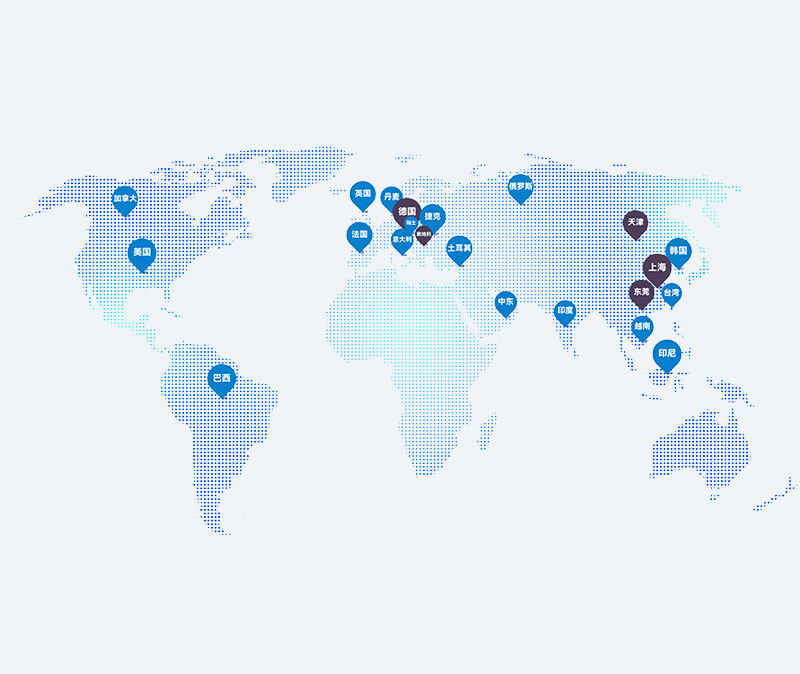
We are ready to respond promptly to your needs and provide professional services.
Copyright © 2026 Shenzhen Zhongwei Testing Technology Co.,Ltd.