




Leveraging our core and differentiated strengths, we provide you with high-quality, comprehensive technology services
More
We provide professional optical product testing services (laser product safety testing and performance parameter testing, photobiological safety testing for non‑laser products), as well as energy efficiency testing services (EU ErP energy efficiency testing, US DOE energy efficiency testing, California CEC energy efficiency testing), among others.
If you have requirements for laser products (laser product safety testing and laser performance parameter testing) and energy efficiency testing (EU ErP energy efficiency testing, US DOE energy efficiency, California CEC energy efficiency, UK energy efficiency testing), please feel free to email us at: admin@ctnt-cert.com




Shenzhen CTNT Zhongwei Inspection (CTNT) is an authoritative third‑party testing organization specializing in laser product testing and certification, holding multiple accreditations including CNAS, IAS, and CMA. We are committed to providing high‑temporal‑resolution, traceable laser pulse width testing services for pulsed laser manufacturers, research institutions, and import/export enterprises worldwide, helping customers accurately master pulse temporal characteristics and providing core data support for ultrafast laser R&D, precision processing, and global market access.
Laser pulse width (also called pulse duration) is the time interval between a reference point on the rising edge (typically the half‑maximum point) and the corresponding point on the falling edge of a single laser pulse. It is usually expressed in nanoseconds (ns), picoseconds (ps), or femtoseconds (fs). It is the most fundamental parameter describing the temporal characteristics of a pulsed laser.
Common classifications:
Long pulse (µs to ms): Used in laser welding, drilling, and other thermal processing.
Nanosecond pulse (1–999 ns): Widely used in laser marking, cleaning, and rangefinding.
Picosecond pulse (1–999 ps): Used for brittle material cutting and nonlinear optics research.
Femtosecond pulse (<1 ps): Used for ultrafast spectroscopy and precision micro‑/nano‑machining.
Pulse width is usually defined by Full Width at Half Maximum (FWHM) – the time difference between the two points at 50% of the pulse peak amplitude.
Core performance indicator: Pulse width determines the timescale of laser‑matter interaction, directly affecting the heat‑affected zone size, processing precision, and edge quality. Short pulses (picosecond/femtosecond) enable “cold processing” and reduce thermal damage.
Application matching: Different processes require specific pulse widths. For example, marking typically needs nanoseconds, ophthalmic surgery requires femtoseconds, and laser rangefinding needs short nanosecond pulses for high resolution. Accurate pulse width testing is a prerequisite for equipment selection and process development.
R&D and quality control tool: In the development of mode‑locked lasers, Q‑switched lasers, gain‑switched lasers, etc., pulse width is a key tuning parameter. Abnormal broadening or compression can indicate cavity misalignment, poor dispersion management, or other issues.
Standards and compliance: Standards such as IEC 60825‑1, GB/T 7247.1, and FDA 21 CFR 1040.10 relate laser radiation safety classification (especially for Class 3R/3B/4 limits) to pulse width. Pulse width test data is required for export certification.
Our laser laboratory is equipped with world‑leading high‑speed photodetection and time‑domain measurement systems, ensuring accurate capture of pulses from nanosecond to femtosecond levels:
High‑speed photodetectors: Choose Si (400–1100 nm), InGaAs (900–1700 nm), or extended‑wavelength detectors with rise time as fast as <30 ps.
High‑bandwidth real‑time oscilloscope: Bandwidth ≥20 GHz (expandable to 65 GHz), sampling rate ≥50 GS/s, capable of accurately reconstructing nanosecond and picosecond pulse waveforms.
Autocorrelator / Frequency‑Resolved Optical Gating (FROG): Dedicated to femtosecond pulse measurement, precisely determining pulse width and phase information, measuring range from 10 fs to tens of picoseconds.
Fast optical trigger receiver and low‑noise coaxial cables: Ensure signal fidelity, reduce jitter and attenuation.
Standard pulse source: Regularly verify system response using a calibrated source with known pulse width.
We select the appropriate measurement method based on the pulse width range (nanoseconds and above vs. picoseconds/femtoseconds) and strictly follow standard operating procedures:
Step 1: Requirement communication
Customer provides product specifications and testing purpose. Engineers determine laser type (Q‑switched, mode‑locked, gain‑switched, etc.), estimated pulse width (ns/ps/fs), repetition rate, and wavelength.
Step 2: Solution development
For nanosecond to picosecond pulses: use high‑speed detector + oscilloscope direct measurement. For femtosecond pulses: use autocorrelator or FROG. If repetition rate is very high (>MHz), ensure detector and oscilloscope bandwidth meet Nyquist sampling criteria.
Step 3: Sample receipt and environmental preparation
Customer mails or delivers the sample to our laboratory. In a constant‑temperature (23±2)°C, electromagnetically shielded environment, connect the detector and oscilloscope, and warm up the laser to stable operation.
Step 4: System calibration
Calibrate the detection‑acquisition system’s impulse response using a standard pulse source. Deconvolve the system’s own rise time to correct the actual pulse width.
Step 5: Formal testing
For nanosecond/picosecond pulses: After attenuation, direct the laser output onto the high‑speed detector. Capture single or multiple pulse waveforms on the oscilloscope. Adjust trigger position to display the waveform fully. Record the FWHM. Repeat at least 5 times and calculate the average and standard deviation.
For femtosecond pulses: Input the laser into the autocorrelator, adjust the delay line, record the second‑order autocorrelation trace, and calculate the pulse width by fitting (assuming Gaussian or sech² waveform).
If anomalies such as pulse pedestal or overshoot are present, record them in detail.
Step 6: Data processing and judgment
Compare the measured pulse width with the customer’s nominal value to determine compliance. For picosecond/femtosecond levels, specify the fitting waveform assumption (Gaussian/sech²). If the pulse width is significantly larger than the theoretical value, analyze possible causes (dispersion, gain saturation, cavity misalignment, etc.).
Step 7: Report issuance
Prepare a detailed bilingual (Chinese/English) test report, including a block diagram of the test system, detector/oscilloscope models, raw waveform screenshots (or autocorrelation trace), FWHM calculation process, and final results. The report is stamped with CNAS/CMA seals.
Step 8: After‑sales interpretation and support
Engineers interpret the pulse width data and provide debugging recommendations for anomalies (e.g., optimizing dispersion compensation, adjusting mode‑locking status) to help customers improve laser temporal performance.
Standard turnaround: Test report issued within 3‑5 working days after sample receipt (femtosecond measurements may require subcontracting or longer; please inquire in advance).
Professional laser laboratory: We have a high‑speed optoelectronic test platform equipped with oscilloscopes ≥20 GHz and picosecond‑level detectors, and we collaborate with specialized femtosecond measurement institutions, covering the full pulse width range.
Over 10 years of experience: Our core team has more than 10 years of experience in pulsed laser testing, having handled numerous test cases for Q‑switched, mode‑locked, and gain‑switched lasers.
Authoritative accreditations: CMA, CNAS, and IAS triple accreditations. Our pulse width test data is widely trusted by domestic and international customers and certification bodies.
Full parameter coverage: In addition to pulse width, we can simultaneously test repetition rate, peak power, pulse energy, average power, wavelength, beam quality, and other parameters in a one‑stop service.
Fast response: Dedicated account manager ensures transparent communication. Expedited service available for urgent projects, including data analysis and fault localization.
Cost‑effective: Reasonable pricing saves customers from investing in expensive high‑speed oscilloscopes and detectors themselves.
Send email / online inquiry
Fill in testing application form
Confirm quotation and turnaround time
Mail sample
Laboratory testing
Report issuance
After‑sales interpretation and support
Take action – let pulse width become the best annotation for your ultrafast laser!
Whether you need to verify the nanosecond pulse width of a Q‑switched laser or precisely measure the ultrashort pulses of a femtosecond laser, an authoritative laser pulse width test report will be a visual proof of your product‘s performance.
Email us: admin@ctnt-cert.com
Shenzhen CTNT Zhongwei Inspection – Your trusted laser product testing expert – capturing the temporal pulse of every beam of your light with picosecond‑level precision.


Equipped with 10+ dedicated labs — including consumer/medical/industrial laser labs, beam performance, spectral, pulse, and electrical safety labs — we cover a full range of laser safety and performance parameters (wavelength, power, divergence, pulse energy, beam quality, etc.).


Holding CNAS (ISO/IEC 17025), U.S. IAS, and CMA certifications. Our testing complies with IEC 60825-1, EN 60825-1, FDA 21 CFR 1040.10, GB/T 7247.1, and major energy efficiency programs (DOE, CEC, ERP).


From product testing and technical document review to certification application and energy efficiency label registration (US DOE, CEC, EU ERP) — we streamline your path to global markets.
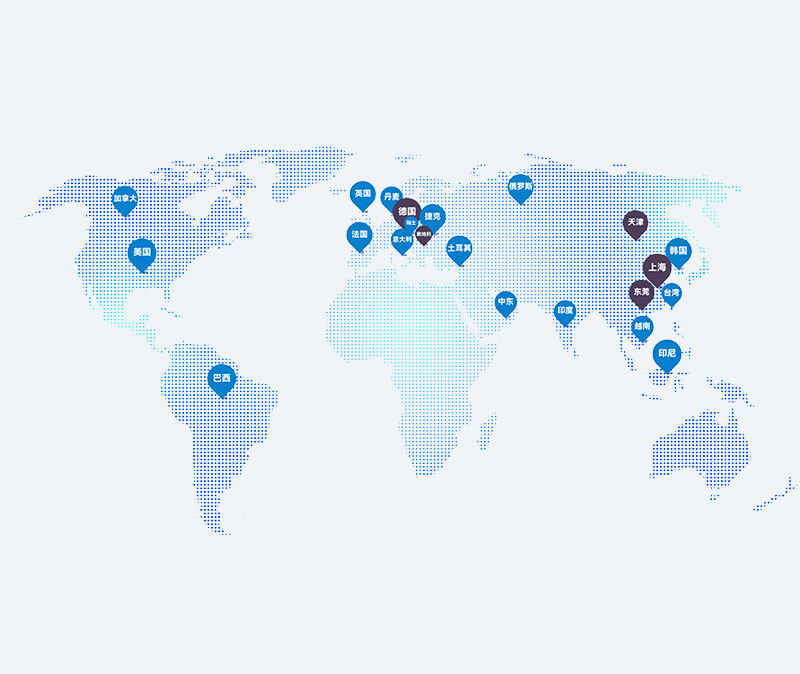
We are ready to respond promptly to your needs and provide professional services.
Copyright © 2026 Shenzhen Zhongwei Testing Technology Co.,Ltd.