




Leveraging our core and differentiated strengths, we provide you with high-quality, comprehensive technology services
More
We provide professional optical product testing services (laser product safety testing and performance parameter testing, photobiological safety testing for non‑laser products), as well as energy efficiency testing services (EU ErP energy efficiency testing, US DOE energy efficiency testing, California CEC energy efficiency testing), among others.
If you have requirements for laser products (laser product safety testing and laser performance parameter testing) and energy efficiency testing (EU ErP energy efficiency testing, US DOE energy efficiency, California CEC energy efficiency, UK energy efficiency testing), please feel free to email us at: admin@ctnt-cert.com




Shenzhen CTNT Zhongwei Inspection (CTNT) is an authoritative third-party testing organization specializing in laser product testing and certification, holding multiple accreditations including CNAS, IAS, and CMA. We are committed to providing high-resolution, traceable laser wavelength testing services for laser manufacturers, research institutions, and import/export enterprises worldwide, helping customers accurately master the spectral characteristics of their lasers and providing solid data support for product R&D, quality control, and global market access.
Laser wavelength refers to the distance between two adjacent peaks (or troughs) of the electromagnetic wave emitted by a laser as it propagates through space, usually expressed in nanometers (nm). It is one of the most fundamental physical parameters of a laser, determining the color, photon energy, and interaction mechanism with matter.
Common laser wavelengths include:
Ultraviolet (e.g., 355 nm, 266 nm)
Visible (e.g., 405 nm, 450 nm, 532 nm, 635 nm, 650 nm, 780 nm)
Near infrared (e.g., 808 nm, 980 nm, 1064 nm)
Mid and far infrared (e.g., 2940 nm, 10.6 μm for CO₂ lasers)
Identity marker: Laser wavelength acts as the "ID card" of the laser, the primary parameter distinguishing different laser types. Accurate wavelength measurement is a basic requirement for product specifications and marketing materials.
Application matching: Different materials have vastly different absorption rates for different wavelengths. Wavelength deviation can significantly degrade or even disable cutting, welding, marking, and other processing effects. Accurate wavelength testing is a prerequisite for process selection.
Compliance and safety: Standards such as IEC 60825-1, GB/T 7247.1, and FDA 21 CFR 1040.10 require laser products to have their wavelength specified. Wavelength information is an important basis for laser safety classification and protective measure design.
R&D and quality control: During laser production, wavelength drift may indicate problems such as poor cavity temperature control, grating misalignment, or gain medium aging. Wavelength testing is a critical step in R&D debugging and factory acceptance.
Our laser laboratory is equipped with world-class spectral analysis systems, ensuring wavelength test accuracy and repeatability:
High-resolution spectrometer: Uses high-precision grating dispersion and CCD array detectors, achieving wavelength resolution down to 0.01 nm, covering a wide spectral range from 200 nm to 2500 nm.
Wavemeter: For single-longitudinal-mode and narrow-linewidth lasers, we use interferometric wavemeters for absolute wavelength measurement with accuracy up to ±0.0001 nm.
Standard light source: The spectrometer is regularly calibrated using mercury lamps, neon lamps, or frequency-stabilized lasers, ensuring traceability to national metrological standards.
Fiber-coupled probe and integrating sphere: Adapt to different power levels and beam sizes, preventing saturation or damage to the detector.
We strictly follow standardized testing procedures to ensure reliable results:
Step 1: Requirement communication
Customer provides product specifications and testing purpose (e.g., R&D verification, factory acceptance, certification application). Engineers determine laser type (CW/pulse), estimated wavelength range, output power, and beam size.
Step 2: Solution development
Based on laser characteristics, select the appropriate spectrometer, wavemeter, or accessories. For high‑power lasers, add attenuators or an integrating sphere; for narrow‑linewidth requirements, use a high‑precision wavemeter.
Step 3: Sample receipt and environmental preparation
Customer mails or delivers the sample to our laboratory. In a constant‑temperature (23±2)°C, constant‑humidity environment, the spectrometer is warmed up for at least 30 minutes to ensure stable wavelength readings.
Step 4: System calibration
Before testing, the spectrometer is calibrated using a standard light source (e.g., a mercury lamp of known wavelength or a frequency‑stabilized laser) to ensure error within ±0.1 nm (standard) or ±0.001 nm (high precision).
Step 5: Formal testing
Couple the laser output to the spectrometer entrance slit or fiber probe, and record the spectrum under stable output conditions. Record peak wavelength, full width at half maximum (FWHM, i.e., linewidth), center wavelength, and other parameters. For tunable lasers, measure the actual wavelength at several setpoints.
Step 6: Data analysis and judgment
Compare the measured wavelength with the customer‘s nominal value or product specification, calculate the deviation. If multi‑longitudinal mode or mode hopping is observed, describe the spectral characteristics in detail in the report.
Step 7: Report issuance
Prepare a detailed bilingual (Chinese/English) test report, including test environment, instrument information, spectral graphs, wavelength data, and compliance judgment. The report is stamped with CNAS/CMA seals, and both electronic (PDF) and paper versions are provided.
Step 8: After‑sales interpretation and support
Engineers explain possible causes of wavelength deviation (e.g., poor temperature control, cavity length changes) and provide optimization recommendations to help customers improve design or debug processes.
Standard turnaround: Test report issued within 5‑7 working days after sample receipt. Expedited service available for urgent projects.
Professional laser laboratory: We have a dedicated optical darkroom and precision spectral measurement platform, fully meeting the test environment requirements of IEC 60825‑1.
Over 10 years of experience: Our core team has more than 10 years of experience in laser product testing and certification, having served over 1,000 laser companies.
Authoritative accreditations: CMA, CNAS, and IAS triple accreditations. Wavelength test data is widely accepted by domestic and international market regulatory authorities and e‑commerce platforms.
Full parameter coverage: In addition to wavelength, we can simultaneously test over 120 laser performance parameters, including power, pulse width, beam quality (M²), divergence angle, beam diameter, spectral width, degree of polarization, etc., providing a one‑stop report.
Fast response: Dedicated account manager ensures transparency from consultation to report delivery. Expedited service available for urgent projects.
Cost‑effective: Reasonable pricing with no hidden fees, and bulk testing discounts for long‑term customers.
Online or telephone inquiry
Fill in testing application form
Confirm quotation and turnaround time
Mail sample
Laboratory testing
Report issuance
After‑sales interpretation and support
Take action – let wavelength be the best showcase for your product!
Whether you need to verify the center wavelength of a single‑mode fiber laser or measure the spectral linewidth of a broadband semiconductor laser, an authoritative laser wavelength test report will become powerful proof of your product quality.
Email us: admin@ctnt-cert.com
Shenzhen CTNT Zhongwei Inspection – Your trusted laser product testing expert – guarding every beam of your light with precision spectral technology.


Equipped with 10+ dedicated labs — including consumer/medical/industrial laser labs, beam performance, spectral, pulse, and electrical safety labs — we cover a full range of laser safety and performance parameters (wavelength, power, divergence, pulse energy, beam quality, etc.).


Holding CNAS (ISO/IEC 17025), U.S. IAS, and CMA certifications. Our testing complies with IEC 60825-1, EN 60825-1, FDA 21 CFR 1040.10, GB/T 7247.1, and major energy efficiency programs (DOE, CEC, ERP).


From product testing and technical document review to certification application and energy efficiency label registration (US DOE, CEC, EU ERP) — we streamline your path to global markets.
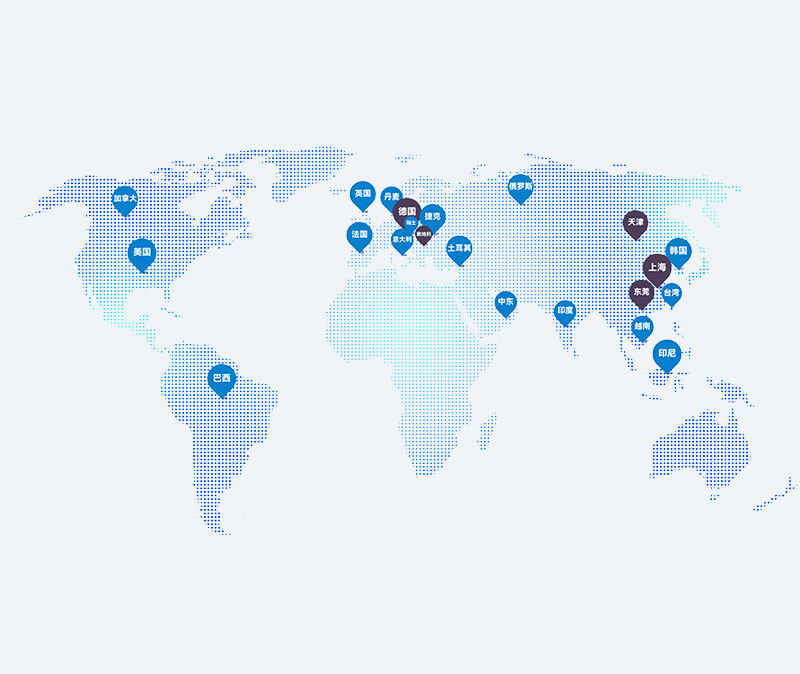
We are ready to respond promptly to your needs and provide professional services.
Copyright © 2026 Shenzhen Zhongwei Testing Technology Co.,Ltd.