




Leveraging our core and differentiated strengths, we provide you with high-quality, comprehensive technology services
More
We provide professional optical product testing services (laser product safety testing and performance parameter testing, photobiological safety testing for non‑laser products), as well as energy efficiency testing services (EU ErP energy efficiency testing, US DOE energy efficiency testing, California CEC energy efficiency testing), among others.
If you have requirements for laser products (laser product safety testing and laser performance parameter testing) and energy efficiency testing (EU ErP energy efficiency testing, US DOE energy efficiency, California CEC energy efficiency, UK energy efficiency testing), please feel free to email us at: admin@ctnt-cert.com




1. Standard Full Name & Introduction
Full Name: IEC 62471 “Photobiological safety of lamps and lamp systems”
Issuing Body: International Electrotechnical Commission (IEC)
Core Purpose: This standard is the global scientific benchmark for assessing the potential health hazards (primarily to the eyes and skin) of all non‑laser optical radiation sources – i.e., lamps and lamp systems. Through measurement and calculation, it classifies products into four risk groups: Exempt Group, Risk Group 1 (low risk), Risk Group 2 (moderate risk), and Risk Group 3 (high risk).
2. Why Is This Standard So Important?
(1) Scientifically Quantify Risks
Go beyond subjective perception – use precise irradiance and radiance data to quantify the optical radiation hazards of your product in the blue light, ultraviolet, and infrared bands, providing scientific evidence for product safety.
(2) Foundation for Global Market Access
It is the most basic and mandatory safety requirement for lamps and lamp systems in many countries and regions, including EU CE certification (EN 62471) and North America (ANSI/IES RP‑27 series).
(3) Mitigate Legal Liability
Eliminate consumer complaints, legal disputes, and large claims caused by blue light retinal hazard, ultraviolet skin hazard, and other risks from light source products at the source.
1. Applicable Product Range
Almost all powered non‑laser light source products, especially:
LED luminaires, bulbs, and modules (e.g., classroom lights, desk lamps, industrial lighting)
Various displays (mobile phones, tablets, computers, televisions)
Projectors, stage lights, ultraviolet disinfection lamps
Beauty lamps, intense pulsed light (IPL) beauty devices
Various special light sources (e.g., infrared lamps, medical lighting equipment)
2. Core Testing Items & Hazard Assessment
Retinal blue light hazard: Assess the photochemical damage risk of short‑wave blue light to the retina.
Ultraviolet hazard: Assess the hazard of UV radiation to the cornea, lens, and skin (e.g., UV keratitis, skin erythema).
Retinal thermal hazard: Assess the retinal temperature rise damage caused by near‑infrared radiation.
Infrared radiation hazard to the eye: Assess the potential effect of infrared radiation on the lens.
Skin thermal hazard: Assess the burn risk of infrared radiation to the skin.
3. Related Markets & Directives
Directly relevant to: EU CE certification (Low Voltage Directive/LVD), China Compulsory Certification (CCC – for certain product categories), and safety market access in major global markets.
Derived standards: EN 62471 (EU), GB/T 20145 (China).
Equipped with professional‑grade measurement systems such as imaging luminance meters and spectroradiometers, ensuring accurate and reliable data for complex light sources (e.g., non‑uniform displays).
We not only provide test data but also offer risk level interpretation, hazard source analysis, and product optimisation recommendations – helping you improve product safety design at the source.
With deep understanding of global derived standards such as IEC 62471, EN 62471, and GB/T 20145, we help you meet the optical safety compliance requirements of multiple markets in one go.
Directly endorsed by national CMA, CNAS, and IAS accreditations – our reports are widely recognised by market regulatory authorities at all levels.
Shenzhen Zhongwei Inspection – Professional Laser Laboratory providing one‑stop testing and certification solutions for your IEC 62471 / EN 62471 compliance needs.
1. Accreditations
Our testing services are performed strictly within the scope of CNAS accreditation. Our IEC 62471 / EN 62471 test reports are widely recognised by customers.
2. Frequently Asked Questions
Q: What is the difference between IEC 62471 and the laser safety standard IEC 60825‑1?
A: IEC 62471 applies to non‑laser broadband light sources (e.g., LED lights, displays) and assesses their overall radiation hazards. IEC 60825‑1 applies to lasers – monochromatic, highly directional light sources. The product types and physical characteristics covered by the two standards are completely different. If a product contains both a laser and ordinary light sources, it may need to comply with both standards.
Don‘t let optical radiation become an invisible health hazard. Use authoritative data to safeguard your product safety.
Email us now for your exclusive combined IEC 62471 and EN 62471 testing solution and quote.


Equipped with 10+ dedicated labs — including consumer/medical/industrial laser labs, beam performance, spectral, pulse, and electrical safety labs — we cover a full range of laser safety and performance parameters (wavelength, power, divergence, pulse energy, beam quality, etc.).


Holding CNAS (ISO/IEC 17025), U.S. IAS, and CMA certifications. Our testing complies with IEC 60825-1, EN 60825-1, FDA 21 CFR 1040.10, GB/T 7247.1, and major energy efficiency programs (DOE, CEC, ERP).


From product testing and technical document review to certification application and energy efficiency label registration (US DOE, CEC, EU ERP) — we streamline your path to global markets.
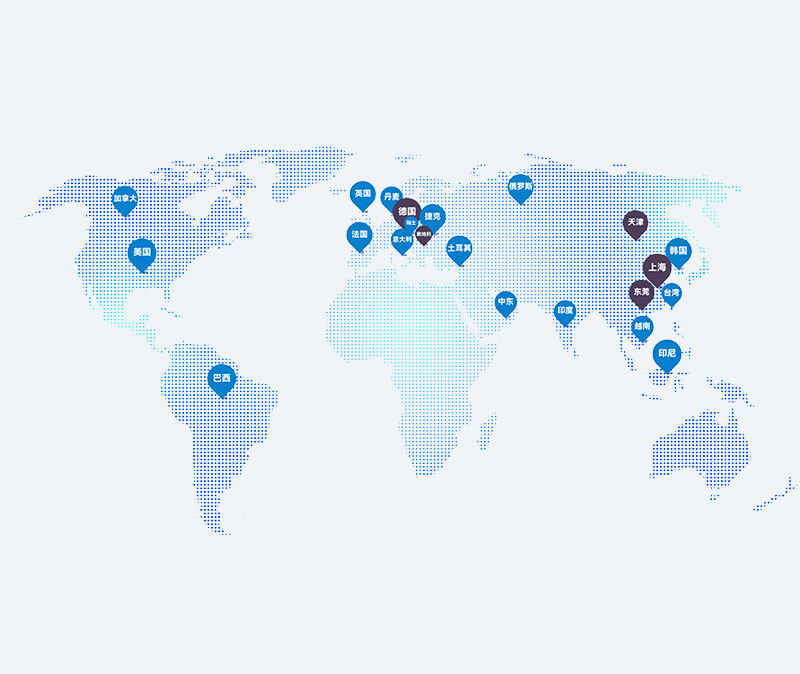
We are ready to respond promptly to your needs and provide professional services.
Copyright © 2026 Shenzhen Zhongwei Testing Technology Co.,Ltd.