Driven by global industrial automation and digital transformation, laser barcode scanners serve as core data‑capture devices with rising market demand. Statistics show that the global 1D laser barcode scanner market reached approximately USD 2.544 billion in 2024. As the world’s largest consumer market and logistics hub, the United States maintains particularly strong demand for laser barcode scanners.
Nevertheless, the US imposes strict market‑access requirements, especially for radiation‑emitting products. FDA compliance is a non‑negotiable prerequisite for laser barcode scanners exported to the United States.
01 Why FDA Compliance Is Mandatory
Laser barcode scanners fall under radiation‑emitting electronic products regulated by the FDA. Per federal regulations 21 CFR 1040.10 and 21 CFR 1040.11, all laser products entering the US market must comply with FDA laser‑performance standards, regardless of power rating or intended application.Laser barcode scanners without completed FDA registration may face the following consequences:
Detention or denial of entry by U.S. Customs
Risk of product destruction
Sales prohibition on major e‑commerce platforms including Amazon
FDA compliance constitutes the fundamental legal requirement for product distribution within the U.S. market.
02 Applicable Products and Laser Classification
Scope of Covered Products
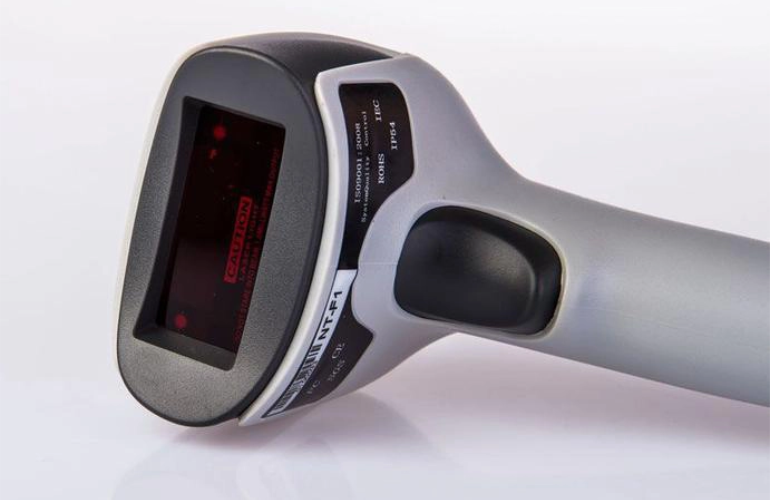
Laser barcode scanners (also referred to as laser scan engines or barcode readers) are categorized by scanning principle:
1D laser scanners: Read barcodes by reflecting laser beams via rotating prisms or oscillating mirrors.
2D area‑imaging scanners: Certain high‑end models integrate laser pointers for aiming purposes.
Fixed‑mount scanners: Deployed on production lines, self‑service terminals and similar installations.
Common Laser Hazard Classes
Most laser barcode scanners designed for open‑environment operation are targeted for Class I, safe under reasonably foreseeable operating conditions even when viewed through optical instruments. Older‑generation or industrial long‑range scanners may fall into Class II (visible‑light lasers, where the human blink reflex provides adequate protection).
Important note: A self‑claimed “safe” design does not replace formal verification. Laser classification must be validated through FDA‑recognised testing.
03 Required Test Items
Testing for laser barcode scanners under 21 CFR 1040.10 includes the following key items:
Laser radiation safety testing: Measure laser output power, energy, wavelength and beam divergence to determine the Accessible Emission Limit (AEL).
Scanning‑safety testing: Evaluate radiation exposure levels generated during beam‑scanning operations.
Environmental adaptability testing: Assess laser‑radiation stability across varying temperature and humidity conditions.
Safety‑interlock validation: Verify the effectiveness of enclosure protection and safety interlock mechanisms.
Label and documentation review: Confirm warning‑label format, content and placement satisfy FDA specifications; verify user manuals contain complete safety disclosures.
04 Compliance Procedure
FDA compliance for laser barcode scanners is not a single‑issued certificate, but a combined testing‑and‑registration regime. The official outcome is an Accession Number issued via the FDA system.Step 1: Product Classification and Test‑plan DevelopmentDetermine laser class (typically Class I or Class II) based on output power, wavelength and other parameters. Different classes correspond to distinct safety criteria and test scopes.Step 2: Laboratory TestingSubmit units to a qualified third‑party laboratory for full testing against 21 CFR 1040.10. Upon passing, an English‑language test report meeting FDA requirements will be generated. Testing normally takes 5‑7 working days.Step 3: Compile Technical Documentation and LabelsPrepare comprehensive English‑language technical files: circuit diagrams, optical‑structure drawings, laser‑source specifications, user manuals, quality‑control flowcharts and more. Laser warning labels must strictly follow FDA formatting rules. Sole reliance on CE or European‑standard labelling will result in customs‑clearance failure.Step 4: Appoint a U.S. AgentNon‑U.S. manufacturers must retain a U.S.‑resident agent to receive official FDA communications. This requirement cannot be waived.Step 5: Submit FDA RegistrationComplete establishment registration (obtain FEI code) and product listing via the FDA FURLS portal, and file the Laser Product Report. FDA review generally takes 1‑2 weeks.Step 6: Obtain the Accession NumberAfter successful FDA review, an Accession Number will be assigned. This number must be referenced on FDA Form 2877 during customs import declarations.Step 7: Annual Maintenance ObligationManufacturers are required to submit an annual report to the FDA by September 1 each year to sustain compliance. Late filings may invalidate registration records.
05 Timeline and Cost Reference
Project Timeline
Laboratory testing: 5‑7 working days
FDA registration review: 1‑2 weeks
Overall turnaround: 2‑4 weeks (subject to product complexity and document‑revision efficiency)
Cost Overview
Total costs consist primarily of laboratory‑testing fees plus FDA‑registration service charges (including U.S.‑agent representation). Quotations vary depending on laser classification and test scope. Please share full product specifications for an accurate quotation.
06 Our Service Capabilities
As a professional third‑party laser‑testing laboratory, we deliver end‑to‑end support for laser barcode‑scanner FDA compliance:
Accredited credentials: CNAS (ILAC L15898) and CMA dual‑accredited laboratory. One of the few domestic labs recognised for IEC/EN/BS/AS 60825, GB 7247.1 and FDA 21 CFR 1040.10 testing.
Full‑scope testing: Laser‑radiation safety, scanning‑safety performance, environmental adaptability, safety‑interlock validation and label‑compliance assessment.
Turn‑key managed service: Sample testing, report issuance, technical‑document preparation, FDA submission, U.S.‑agent coordination and annual‑report administration under one project.
Broader‑standard coverage: We also provide testing services for IEC 60825‑1, GB/T 7247.1, EN 60825 and related standards.