

Solutions
Industry Solutions

Industry Solutions

More
Solutions
Services

Leveraging our core and differentiated strengths, we provide you with high-quality, comprehensive technology services

More
Solutions
News Center

we provide you with high-quality, comprehensive technology services

More
Solutions
Why Choose Us

We provide professional optical product testing services (laser product safety testing and performance parameter testing, photobiological safety testing for non‑laser products), as well as energy efficiency testing services (EU ErP energy efficiency testing, US DOE energy efficiency testing, California CEC energy efficiency testing), among others.

More
Solutions
Contact Us

If you have requirements for laser products (laser product safety testing and laser performance parameter testing) and energy efficiency testing (EU ErP energy efficiency testing, US DOE energy efficiency, California CEC energy efficiency, UK energy efficiency testing), please feel free to email us at: admin@ctnt-cert.com


More
Industry News

Shenzhen Zhongwei Testing Technology Co.,Ltd.

Industry News

Laser Beam Quality and Intensity Distribution Testing: Understanding Laser Performance via M² Factor

2026-08-05 Industry News

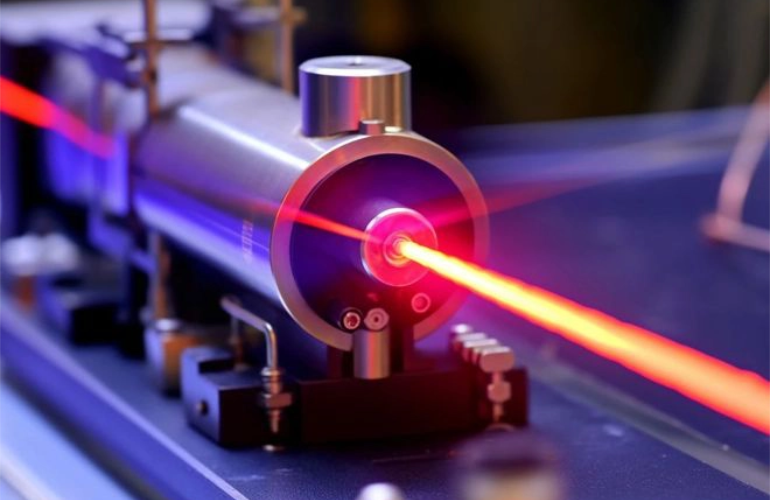
The beam quality of a laser directly determines its practical usability. Whether it is the focusing capability for precision machining or energy control in medical surgery, performance hinges on two core parameters: the beam‑quality factor (M² factor) and intensity distribution.


55555.png


01 What are the M² Factor and Intensity Distribution?

Beam‑quality Factor (M²)

The M² factor is an internationally‑recognized quantitative metric for evaluating laser beam quality. It indicates how closely a real‑world laser beam approximates an ideal Gaussian beam.For an ideal fundamental‑mode Gaussian beam, M² equals 1. For practical lasers, the closer the M² value is to 1, the higher the beam quality, the stronger the focusing performance, and the more concentrated the energy. Conversely, a higher M² value corresponds to poorer beam quality, increased far‑field divergence, and reduced energy concentration.

Intensity Distribution

Intensity distribution describes the spatial energy profile across the cross‑section of a laser beam. Common profiles include:
  • Gaussian distribution: Peak energy at the beam centre with reduced energy toward edges. Suitable for cutting and marking.

  • Flat‑top distribution: Uniform energy across the beam cross‑section. Ideal for laser annealing and surface treatment.

  • Ring‑shaped (donut) distribution: Energy arranged in an annular pattern for specialised processing applications.

  • Multimode distribution: Irregular energy profile, which typically requires optimisation.

Different intensity profiles match distinct application scenarios. Even with identical M² values, lasers with different intensity distributions can yield markedly different laser‑material interaction results.


02 Impacts of M² Factor and Intensity Distribution on Laser Performance

  • M² factor determines focusing limit: In precision machining, the M² value defines the minimum achievable focused spot size. A smaller spot delivers higher power density and finer machining accuracy. M² < 1.3 is generally regarded as the threshold requirement for precision micro‑machining.

  • M² factor affects far‑field propagation: A higher M² value causes faster beam divergence, enlarging the far‑field spot and lowering energy density, which impairs performance for remote processing or long‑distance beam delivery.

  • Intensity distribution governs processing uniformity: Non‑uniform intensity may lead to local over‑processing or under‑processing, undermining product consistency and yield rate. For instance, flat‑top profiles outperform Gaussian profiles for large‑area uniform treatment in laser annealing.


03 Test Methods and Standards

M² Factor Testing (per ISO 11146)

A beam analyser paired with a high‑precision translation stage measures spot sizes at multiple positions along the beam propagation axis. The beam‑waist radius and divergence angle are obtained by curve‑fitting, from which the M² factor is calculated.Key requirement: Sufficient sampling points must be acquired both before and after the beam waist. Fitting accuracy directly governs result reliability. M² is not suitable for highly non‑Gaussian extreme beam profiles; under such circumstances, supplementary metrics such as the β factor shall be adopted for comprehensive assessment.

Intensity Distribution Testing (per ISO 13694)

Two primary methods are applied: the camera‑based method and the scanning‑slit method. Cross‑sectional beam images are captured at a designated plane, and data processing derives power / energy density distribution parameters. For pulsed lasers, pulse‑energy shall be measured synchronously to compute energy‑density distribution.


04 Our Testing Services

As a professional third‑party laser‑testing laboratory, we offer comprehensive services for laser beam quality and intensity‑distribution characterisation:
  • Full‑parameter testing: M² factor, beam‑waist radius, divergence angle, 2D / 3D intensity distribution, beam diameter and other metrics

  • Testing capacity: Power range from pW up to 5 kW; pulse‑measurement resolution down to picosecond level

  • Accreditation: CNAS‑ and CMA‑accredited laboratory, holding authorisation for more than 70 laser‑related standards and over 120 test‑capacity parameters

  • Reference standards: ISO 11146 (M² measurement), ISO 13694 (beam intensity distribution measurement)

  • Extended services: Concurrent support for laser safety classification certification and other laser‑performance parameter testing