Have you ever considered that the lighting surrounding us every day, beyond illumination, may carry potential health risks?
As lighting products grow increasingly diverse, photobiological safety has become a critical market access threshold worldwide.
As a professional testing laboratory, we frequently receive these inquiries:“Do our LED lights require photobiological safety testing?”“Is photobiological safety a mandatory requirement for EU exports?”“How can products become more competitive in the marketplace?”
Today we deliver a systematic interpretation of IEC 62471 photobiological safety assessment to resolve all your questions.
What is IEC 62471?
IEC 62471 is the international standard Photobiological safety of lamps and lamp systems, published by the International Electrotechnical Commission. It evaluates potential optical radiation hazards to human eyes and skin generated by artificial light sources within the wavelength range of 200 nm to 3000 nm.
Covering ultraviolet, visible and infrared bands, this standard, issued in 2006, has been widely adopted as a safety benchmark for major global markets including EU CE marking, US FDA requirements and China GB standards.
Which Products Need IEC 62471 Testing?
Nearly all non-laser artificial light sources fall under its scope:
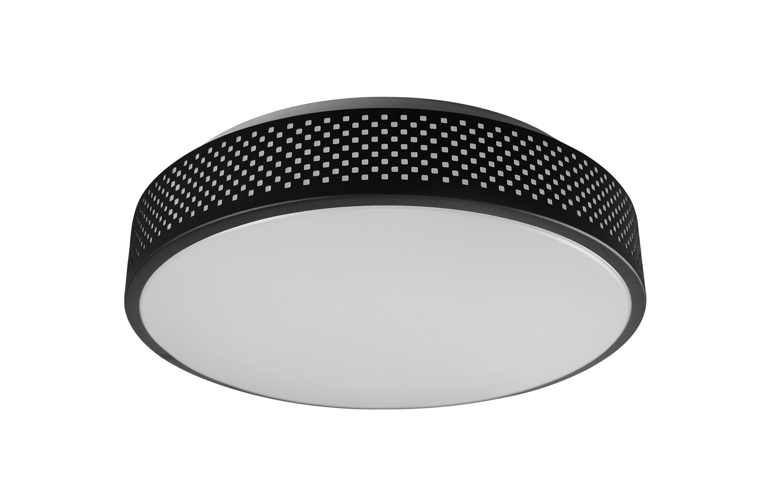
LED lighting products (bulbs, panel lights, downlights, etc.)
Fluorescent lamps, incandescent lamps, halogen lamps
Gas discharge lamps, arc lamps
Display backlights, light sources for medical and beauty equipment
Important Note: Laser products shall comply with the IEC 60825 series standards.
In addition, IEC 62471-7 published in 2023 provides a simplified assessment method specifically for blue light hazard evaluation of LED products.
Six Hazard Categories & Risk Group Classification
IEC 62471 assesses six main types of optical radiation hazards:
Actinic Ultraviolet Hazard
Retinal Blue Light Hazard (key focus)
Retinal Thermal Hazard
Infrared Radiation Hazard
Skin Thermal Hazard
Near-Ultraviolet Photochemical Hazard
Based on hazard severity, products are classified into four risk groups:
RG0 (Exempt Group): No foreseeable hazards; safe for prolonged exposure
RG1 (Low Risk): Safe under normal operating conditions
RG2 (Moderate Risk): Harm may occur after short-term direct exposure
RG3 (High Risk): Injury may arise even from momentary exposure
Assessment Process & Required Documentation
IEC 62471 is not a formal certification scheme, but a testing and evaluation procedure. Its test report is commonly used as supporting documentation for CE, CB, CQC and other certification schemes.
Typical workflow:
Sample submission (1–2 complete luminaires)
Spectral measurement across 200–3000 nm
Radiation calculation and hazard assessment
Issuance of test report (CNAS / CMA accredited)
Support for full-product certifications (CE, UKCA, Saudi SABER, etc.)
Required documents:
Product specification sheet
Circuit diagram or optical structure description
User manual (including safety warnings)
Functional test samples
Testing Lead Time & Validity
Standard testing takes 5–10 working days. Complex products or multi-mode testing (e.g., dimmable lights) may extend the cycle to 2 weeks.
Expedited service is available at our laboratory, with reports ready within a minimum of 3 working days.
Why Manufacturers Need IEC 62471 Compliance
For exporting enterprises, photobiological safety compliance is not merely a customs clearance requirement, but essential for risk control and brand development:
Meet regulatory access requirements: EU ErP Directive and energy labelling regulations explicitly demand photobiological safety testing
Mitigate trade risks: Reduce the likelihood of cargo detention and product recalls overseas
Build brand credibility: Demonstrate safe lighting design and strengthen market competitiveness
Optimize product development: Leverage test results to improve designs and achieve lower risk group ratings
Recommendations for Cross-Border Sellers & Manufacturers
If you are a cross-border e-commerce operator or lighting exporter:
Conduct photobiological safety evaluation at the product development stage
Prioritize RG0 / RG1 classification, especially for household and children-oriented lighting scenarios
Keep track of the new IEC 62471-7 standard; eligible LED products can adopt simplified blue light assessment
Retain complete test reports and technical documentation to cope with overseas market surveillance
Select laboratories holding internationally recognized accreditations such as CNAS and ILAC-MRA