Laser technology is widely applied across medical treatment, industrial manufacturing, optical communication, scientific research and household devices. However, the high energy density of lasers creates inherent hazards such as eye damage, skin burns and even fire risks.
How can lasers be used safely? The International Electrotechnical Commission (IEC) and China’s national standard GB 7247 have established a unified laser hazard classification system with four core safety classes. Understanding these classes allows users to implement proper protective measures.
1. Basic Principles of Laser Safety Classification
Laser safety classes are determined by three core parameters:Radiation wavelength ranging from 180 nm to 1 mmOutput power or energy for continuous wave or pulsed lasersLevel of accessible laser emissionManufacturers are required to complete hazard classification during product design and production, and attach permanent warning labels and instructions on all laser equipment. For any laser device, checking its safety class should be the first step for operators.
2. Full Breakdown of Four Laser Safety Classes
Class 1 Lasers
Characteristics
Safe under all normal operating conditions. No eye injury will occur even when viewed through optical tools such as magnifying glasses.Common Applications
Laser printers, CD and DVD players, various measuring instrumentsImportant Note
A Class 1 device may contain high-power laser sources fully enclosed inside the housing with no accessible laser radiation. No protective measures are needed as long as the equipment casing remains intact.Class 2 Lasers
Characteristics
Limited to visible light with wavelengths between 400 nm and 700 nm and output power below 1 mW. Although eye damage risks exist, the human natural blink reflex of approximately 0.25 seconds generally prevents permanent harm. Intentional prolonged staring at the beam still poses dangers.Common Applications
Laser pointers, laser spirit levels, demonstration laser equipmentLabelling Mandate
Clear warning labels stating not to stare into the laser beam must be fitted.Class 3 Lasers
This category includes two subclasses with significantly elevated hazards.Class 3R
Visible light output ranges from 1 mW to 5 mW; invisible laser emission is capped at five times the Class 1 limit. Direct beam viewing brings moderate risks, and this type is mainly used for laboratory research and educational demonstrations.Class 3B
Continuous-wave output between 5 mW and 500 mW or pulsed energy below 10 J per square centimeter. Direct beam exposure causes severe eye and skin injuries, while diffuse reflected light such as beam reflections off walls is generally safe. Equipment must be equipped with safety interlocks and key-operated power switches. Typical uses include spectroscopy equipment and entertainment laser lighting.Class 4 Lasers
Characteristics
Continuous-wave output exceeding 500 mW or pulsed energy above 10 J per square centimeter, representing the highest hazard class of lasers.Potential Hazards
Instant permanent blindness and severe skin burns from direct beam exposureDangerous diffuse reflectionsFire ignition risksHarmful plasma radiation generated by laser interaction with materialsApplication Scenarios
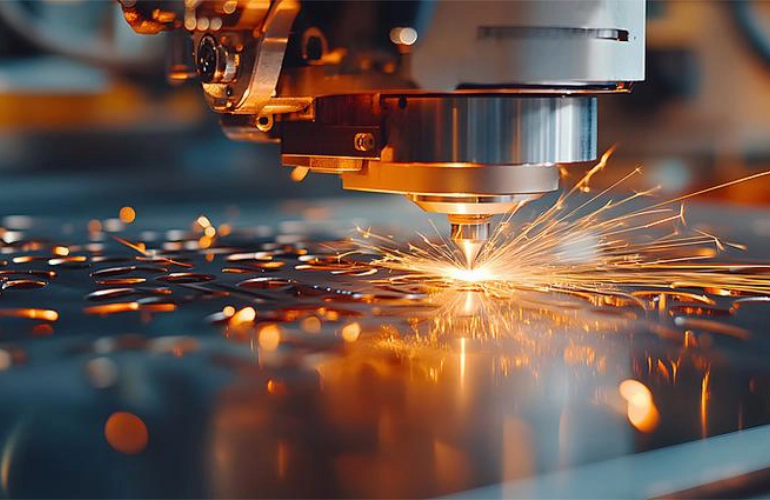
Industrial laser cutting and welding, surgical medical lasers, military laser equipmentOperation Requirements
Strict engineering controls and full personal protective equipment are mandatory at all times.
3. Class-Specific Safety Protection Requirements
Administrative Controls
Class 1 and Class 2: Reliant on safety training and warning signage onlyClass 3B and Class 4: Formal written standard operating procedures, designated laser safety officers and restricted operation zones are compulsoryEngineering Controls
Class 3B: Equipped with safety interlocks, beam stops and remote operation functionsClass 4: Additional zone interlocks, full beam enclosures, emergency stop systems and ventilation units to remove toxic fumesPersonal Protective Equipment
Class 2: Special laser safety eyewear is generally unnecessaryClass 3B and Class 4: Laser safety goggles matched to the laser’s wavelength and power rating are mandatoryClass 4: Disposable protective coveralls and heat-resistant gloves are also requiredEnvironmental Controls
Dedicated laser laboratories or segregated workstations are required for Class 3B and Class 4 laser operations, with prominent hazard warning signs at all entry points. Windows and reflective surfaces such as mirrors must be treated to avoid unintended beam reflection.
4. Significance of Laser Safety Classification
For Manufacturers
Laser safety class certification is a prerequisite for legal market placement. Integrating hazard classification into the design phase and marking permanent class labels fulfils regulatory compliance and enhances product market competitiveness.For End Users
Clear class markings allow operators to rapidly assess risk levels and implement appropriate protective measures. For research institutions and industrial enterprises, this grading system serves as the foundation for drafting operation protocols and sourcing protective gear.For Regulatory Authorities
Unified international classification standards provide objective technical benchmarks for standardized market supervision. Statistics show global laser-related accidents have dropped by over 70 percent since the widespread adoption of laser safety grading standards.Social Benefits
The laser classification system balances technological innovation and occupational safety. Data from the International Laser Safety Committee indicates that within two decades of standardized classification enforcement, the global laser market expanded 15-fold while severe laser accidents fell by 90 percent.
5. Conclusion
The four-tier laser safety classification system offers a scientific framework to quantify and visualise laser product hazards, delivering systematic safety management solutions covering the full product lifecycle from design and production to end-use operation.As emerging technologies such as ultrafast and high-power lasers continue to evolve, safety standards are updated iteratively. For example, IEC 60825-1:2014 introduced revised provisions for pulsed lasers and extended wavelength coverage. Future integration of artificial intelligence and IoT will further digitise laser safety management, yet the risk-based tiered protection principle remains the cornerstone of laser safety.Respect every laser beam: identify its safety class and apply corresponding protective measures accordingly.