Have you ever wondered what would happen if the continuously scanning beams from automotive and robotic LiDAR hit human eyes?
This concern is not only shared by ordinary consumers but also marks a critical red line for market regulators worldwide. For LiDAR manufacturers, eye safety certification is far more than an ethical consideration — it is an indispensable market access threshold.
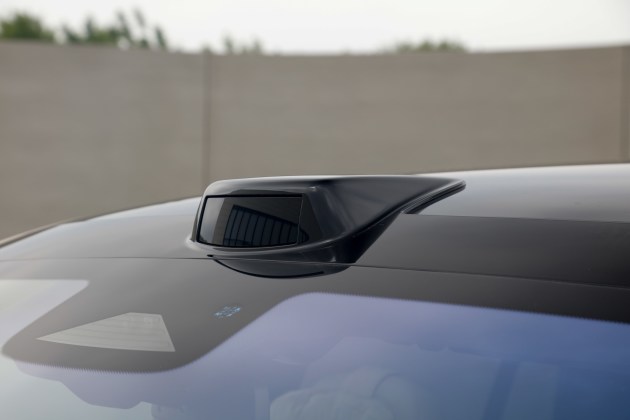
I. Why Is Eye Safety Certification Mandatory for LiDAR?
LiDAR is widely hailed as the "machine vision" powering autonomous driving and AI robotics. Nevertheless, the laser beams it emits carry extremely high energy density. The human retina is extremely delicate; uncontrolled laser power from LiDAR can inflict irreversible eye damage, equivalent to staring directly at the sun.Mainstream automotive LiDAR models (both 905 nm and 1550 nm variants) are engineered with regulated power and scanning speeds to ensure inherent eye safety under normal operating conditions. However, design safety does not equate to regulatory compliance. To prove your device poses no optical hazards, official eye safety certification issued by accredited laboratories is compulsory. This certification acts as a mandatory passport for mass market launch, automotive pre-installment and cross-border exports.
II. Core Standards Governing LiDAR Eye Safety Certification
Three primary sets of standards are globally recognized for laser safety compliance:
1. International Standard: IEC 60825-1
The most universally adopted baseline standard across the globe. It is a prerequisite for market access to the EU and most international regions. This standard establishes laser product classification ranging from Class 1 to Class 4. All commercial LiDAR units must attain Class 1 classification, confirming safe operation under all reasonably foreseeable use scenarios.
2. Chinese National Standard: GB 7247.1
Mandatory for domestic sales in China. The latest edition, GB/T 7247.1-2024, is harmonized with the IEC standard and has been fully enforced since April 2025.
3. US Standard: FDA 21 CFR Part 1040.10
The US market imposes separate regulatory requirements. In addition to IEC 60825-1 compliance, all laser products sold in the US must satisfy FDA laser performance specifications outlined in 21 CFR Part 1040.10.
Technical Tip
1550 nm LiDAR is favored by many manufacturers for compliance advantages. Under IEC standards, 1550 nm wavelength light is readily absorbed by the human cornea, limiting residual energy reaching the retina and allowing higher permissible output power limits. In contrast, 905 nm light exhibits high retinal transmittance, imposing extremely strict constraints on single-pulse energy to pass Class 1 certification.
III. Complete Workflow of LiDAR Eye Safety Certification
The certification process may appear complex to engineering teams, yet it follows a streamlined, mature roadmap when partnered with a professional third-party laboratory such as Shenzhen Zhongwei Inspection Technology:
Preliminary Technical AssessmentSubmit prototype samples and official product specifications to the lab. Test engineers will categorize your LiDAR model and customize tailored testing schemes based on unique optical characteristics of 905 nm or 1550 nm variants.
Formal Sample Testing (Core Stage)Laboratory technicians conduct precise measurements of key parameters including peak power, pulse width, repetition frequency and beam divergence angle.
Single Fault Condition Testing (Most Common Failure Point)Standards require safety verification not only under normal operation but also under simulated single-point fault scenarios — for example, a stalled scanning motor that locks the laser beam onto a fixed focal point. The built-in Automatic Power Control (APC) circuit must immediately reduce or cut off laser output upon fault detection; failure to meet this criterion results in non-compliance.
Report Issuance & Compliance DocumentationOnce all tests are passed, the accredited laboratory issues an official test report. Manufacturers may then draft a Declaration of Conformity (DoC) and affix standardized laser safety labels to complete full compliance formalities.
IV. Required Submission Materials, Certification Timeline & Cost
Four Essential Document Sets for Sample Submission
Full technical drawings: circuit schematics and optical design diagrams
Safety mechanism documentation: detailed descriptions of APC circuits and fault protection logic
Pre-designed product labels and user manuals: laser warning labels must clearly state wavelength and laser classification
Certification Cycle & Cost Overview
Testing Cycle: If no design rectification is required, standard testing can be completed within 5–10 working days, with draft test reports available upon test completion.
Cost Quotation: Pricing varies based on LiDAR channel count, output power and complexity of functional safety mechanisms. Contact our team for a customized quotation tailored to your product model.
V. Entrust Specialized Laser Safety Certification to Industry Experts
LiDAR eye safety certification demands cross-disciplinary evaluation covering optics, machinery, electronics and thermal performance. Fault-mode hardware and software response testing, in particular, poses major compliance risks for teams lacking in-depth expertise of IEC 60825-1. APC circuit testing failures frequently lead to repeated testing cycles and delayed product launch schedules.Shenzhen Zhongwei Inspection Technology stands out as a leading accredited lab in South China for LiDAR compliance services. With over a decade of specialized laser testing and certification experience, we hold dual CMA and CNAS accreditations — rare qualifications enabling full-spectrum laser safety and performance testing. We serve as a trusted compliance partner for numerous top-tier LiDAR manufacturers nationwide.We deliver one-stop certification solutions covering:
Domestic GB 7247.1 compliance certification for the Chinese market
EU CE certification aligned with EN/IEC 60825-1 for European exports
US FDA certification complying with 21 CFR Part 1040.10 for North American market access
Our full-service scope includes pre-test risk screening to identify design flaws in advance, through to official test report issuance. We help manufacturers secure the critical eye safety passport required for global commercialization.In this fast-evolving era of intelligent sensing, only LiDAR validated against the strictest laser safety standards can deliver both long-range detection performance and guaranteed human eye protection.